Showing posts with label Cuisine: Russian. Show all posts

Thursday, 23 April 2009

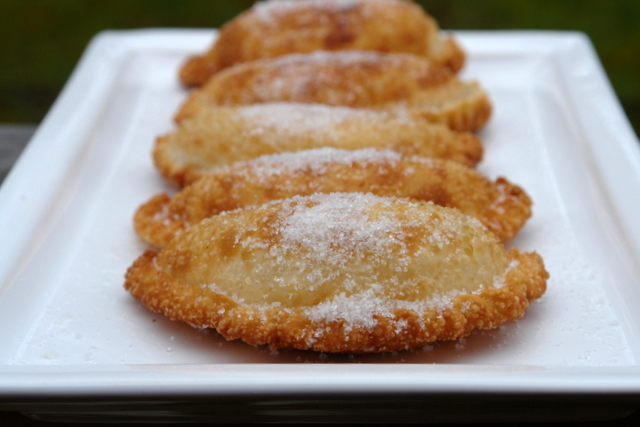
Russian sorrel patties

Polish: szczaw
Albanian: lëpjetë
Wolof: bisaab
Tatar: quzğalaq
Kazakh: қымыздық
Faroese: hømilia
Breton: triñchin
Furlan: panevin
Manx: shughlaig
French: oseille

I guess it may be difficult to find fresh sorrel leaves in many countries. Here in Poland many people cultivate sorrel in their gardens and you can easily buy it in spring in the markt. I am a huge fan of three most common edible Polygonaceae: buckwheat, rhubarb and sorrel. I lately learned a wonderful Russian recipe for sorrel patties, called Пироги с щавелем. They taste... well sourish, and neither sweet nor salty, it is that kind of meal that you can serve with cream or sprinkled with sugar (analogically: in Poland people eat placki ziemniaczane / latkes / raw potato pancakes sprinkled with sugar; in Ecuador people eat empanadas de viento / patties with cheese and onion filling sprinkled with sugar). So don't be afraid of adding sugar to the sorrel filling. Remember: sorrel mixed with sugar tastes like rhubarb! :)

400 gr curd cheese / twaróg
2,5 cups flour
1/2 teaspoon sodium bicarbonate
1/2 teaspoon salt
6 teaspoons sugar
4 tablespoons sour cream
80 gr butter (melted)
1 egg
fresh sorrel leaves (about 400 gr) + sugar + few oil

1. Cut sorrel finely and place it in a bowl, sprinkle with few oil, cover and heat for 2 minutes in mictowave (sorrel will loose its fresh colour and reduce volume)

2. Press curd cheese through a sieve. Add sifted flour, sodium bicarbonate, salt, sugar, sour cream, melted butter and egg. Mix well.

3. Take a tomato-size ball of the dough, sprinkle with few flour just to be able to roll it. Put about 2 tablespoons of sorrel and 1 teaspoon of sugar on the top of rolled dough, hide the filling by closing the dough and form a croquette. Fry them and serve (possibly with sour cream or few sugar)
ps. they are DELICIOUS!!!!!

Tuesday, 17 March 2009

Russian sweet yeast buns

Polish: drożdżówka
Turkish: çörek
Portuguese: pãozinho
Czech: houska
Russian: булочка
French: petit pain
Hebrew: לחמנייה

Ватрушки (vatrushki) are delicious Russian yeast buns, filled usually with fresh cheese, but also with jam, millet, potato puree or apple filling. This is the first of three sweet yeast buns recipe which I just baked: Russian cheese buns, Polish custard buns and Belarussian sour cream buns :)

(to make 8 buns)
dough:
400 gr flour
60 gr butter
60 gr sugar
2 eggs
yeast (25 gr fresh or 7 gr dried)
1/2 teaspoon salt
125 ml milk
1 teaspoon mayonnaise

filling:
250 gr fresh curd cheese (twaróg)
2 eggs (1 yolk separately)
25 gr icing sugar
1 pack vanilla sugar
1 tablespoon butter
1 tablespoon flour

1. Add yeast to warm milk. Set in a warm place for a short time (until it bubbles). After that, sieve flour and add the rest of the ingredients (all of them should be of a room temperature, that is imprescindible when you make a yeast dough!!!) and knead or put them in a bread machine (which I did).

If you do the dough with your own hands, knead until it is homogeneous and elastic. Set in a warm place until it doubles its surface and knead again.

2. Prepare the filling: press the cheese through a sieve, beat eggs with sugar and vanilla sugar (1 yolk waits separately!), add very soft butter, sieve flour and mix everything together.

3. Form apple-size buns. Press each bun with a bottom of a glass (previously, deep it in flour). Leave them for some time to grow again, spread with the resting yolk, fill with cheese and bake (about 20 minutes in 180C oven). Eat warm with a glass of milk.


Monday, 2 March 2009

Russian milky rutabaga soup

Polish: mleko
Vepsian: maid
Udmurt: mel
Sakha/Yakut: үүт
Tatar: söt
Kalmyk: sün
Tuvin: süt
Bashkir: Һөт
Buryat: hün
Chuvash: cĕт

Language freaks will surely enjoy a small translation list of milk in few Russian Federation languages (plus, Polish, as always).
Food freaks will surely enjoy a milky recipe. So everyone is content :)

Milk soups are a part of my childhood memory. In eastern Poland milk soups in hunderts of varieties are eaten especially as a breakfast or a light evening meal. After milk, they can contain noodles (bought or homemade ones), grits, rice, millet, carrot or pumpkin. Milk soups as a dinner are more popular in Russia. There are plenty of varieties and I want to share milk-rutabaga-buckwheat soup recipe, cause it is one of those which I already tried and really liked.

see also: Polish milk and couliflower soup
see also: Polish milk and pumpkin breakfast soup

So here it is, Russian молочный суп из брюквы. To prepare it you will need:

500 gr rutabaga
500 gr potatoes
100 gr buckwheat
1 tablespoon butter
1 l milk
salt and caraway

1. Cut rutabaga in 2 halves. Put into a saucepan with cold water and bring to boil. Pour the water away, peel and cut rutabaga into cubes. Peel and cut potatoes into cubes, too.

2. Wash buckwheat. Boil 1 l water, add buckwheat, cubed vegatables and butter. After 10 minutes of cooking, add milk. Cook on a low heat and season with salt and caraway.

Saturday, 28 February 2009

Russian cranberry kvas

Polish: żurawina
Mari: турнявӧчыж
Hungarian: tőzegáfonya
Inupiaq: qunmun asriaq
Lithuanian: Spanguolė
Ukrainian: журавлина
Karelian: karpalo
Vepsian: garbol
Estonian: jõhvikas
Frisian: feanbei

My today's hero is cranberry. This red small round fruit is actually even called a superfruit due to its nutrient content and antioxidant qualities. Three huge northern countries use this fruit in an interesting way. Canada and USA have their cranberry sauce, muffins, compotes, jellies, cakes and wine, while Russians... well I think I discovered only a low percent of Russian cranberry recipes, besides cranberry kissel all of them are exotic and worth trying, just imagine: cranberry-vegetables-fish cold soup, differrent vegetable salads with cranberries, fish or chicken baked with cranberies, cranberry-wheat drink, patties with cranberry filling, cranberry pancakes, cranberry meringue, cranberry infusion and so on... I will surely try some of them, especially because I adore cranberries but I usually only eat dried cranberries as a snack or buy cranberry ice cream, and because my first meeting with Russian cranberry recipes was successful. I made cranberry kvas (квас клюквенный).

1 kg (fresh, not dried!) cranberries
500 gr sugar
40 gr yeast
5 l water

Wash berries carefully, set in a saucepan and pour boiling water over them. Boil until berries break up. Separate friots from the water. Take 1 cup of cranberry water and mix with yeast to dissolve it. Add sugar and a cup with dissolved yeast to the rest of cranberry water. Set aside for several days until bubbles appear.


After that, pour kvas into bottles and store in a cool place few days before drinking.

Tuesday, 16 September 2008

Russian rolled oats blintz

Polish: bliny
Russian: блины
Ukrainian: Млинці
Belarussian: бліны
Erzya: Пачалксеть
Lithuanian: blynai
Yiddish: בלינצע
Hebrew: בליני
Swedish: blinier
Japanese: ブリヌイ

What is the differrence between blintz, pancakes, crepes, naleśniki, galettes, palatsinken? Well... The main thing to remember is that blintz are always made with yeast. But remember, Central and East-Slavonic nations love all kind of fried batter cakes and know thousands of differrent recipes for them. In Russia, no-yeast crepe-like thin pancakes are called блинчики (blinchiki) and thick, smaller pancakes, often made with fruits or sour milk, are called oладьи (oladi). The most popular blintz are made of a mixture of buckwheat and wheat flour, but you can make blintz from ground rolled ots, millet flour or maize starch. You can serve them with sour cream or melted butter and caviar, herring, sturgeon or salmon meat, or on a sweet way: with honey or jam. I am gonna show you in this post Russian rolled oats blintz, Блины овсяные

2 1/2 cup rolled oats, finely ground (powder)
1 1/2 cup wheat flour
1/2 cup whipping cream
3 cups milk
30 gr fresh yeast
2 tablespoons sugar
2 tablespoons butter
3 eggs

1. Sift ground rolled oats and wheat flour into the bowl. Heat 1 cup milk (don't bring to boil!) and pour it over yeast and stir fast. Pour yeast milk on the flour. Add the rest of milk. Set in a warm place to grow.

2. Whisk eggs with sugar, melted butter and cream. Add to the dough and stir. Fry thin blintz on a saucepan without oil (or with just a drop of it).

Wednesday, 25 June 2008

Russian nettle borscht (beetroot soup)

Polish: barszcz
Lithuanian: barščiai
Finnish: borssi
Russian: борщ
Greek: Μπορς
Persian: سوپ برش
Korean: 보르시
Japanese: ボルシチ
Hebrew: חמיצה
Swedish: borsjtj

Borscht is a soup. Warm or cold, with a variety of ingredients, but with one must: beetroots. With or without sour cream, with potatoes or huge white beans, with boiled egg, little stuffed dumplings or fried savoury pancake roll - so many possibilities, depending on the region, season and occasssion. Polish Christmas borscht, for instance, is nothing else but a beetroot broth served in a cup, which you can just drink. Of course, there are exceptions from each rule, so there are some borscht with no beet: in Russia you can find green borscht made with sorrel, and in Poland during the Eastertime people eat white borscht, made from fermented rye flour, bacon and sausage. As you already know or guess, the homeland of borscht is Eastern Europe. During the surpingtime it is worth to try Russian nettle borscht, борщ с крапивой.

see also: Polish spring nettle soup

2 cups vegetable broth
1 cup beetroot, cooked and diced*
1 cup nettle leaves
2 tomatoes
leeks
garlic (1-2 cloves)
sugar, salt, pepper
optionally: sour cream

1. Prepare beetroots: cook them on your own or use pre-cooked or even canned beets (I know, it is not easy to find fresh beets in each country) and dice or cut julienne (into long thin "matches"

2. After dividing nettle leaves from the stalks, pour some boiling water over the leaves, so that your nettle is not excessively scorching :) This step is very important! After pouring boiling water, nettle will not burn your fingers anymore and you can now chop it


3. Dice tomatoes and mince garlic with a bit of salt

4. Heat the broth. When boiling, add beets, nettle, tomatoes and garlic. Add a bit of sugar and pepper and optionally more salt to taste. Cook 5-10 minutes (vegetables are already pre-cooked and tomatoes don't need much time)

5. You can eat the borscht as it is now, or serve with a tablespoon of sour cream on eah plate.