Showing posts with label Menu: snacks. Show all posts

Thursday, 23 April 2009

Russian sorrel patties

Polish: szczaw
Albanian: lëpjetë
Wolof: bisaab
Tatar: quzğalaq
Kazakh: қымыздық
Faroese: hømilia
Breton: triñchin
Furlan: panevin
Manx: shughlaig
French: oseille

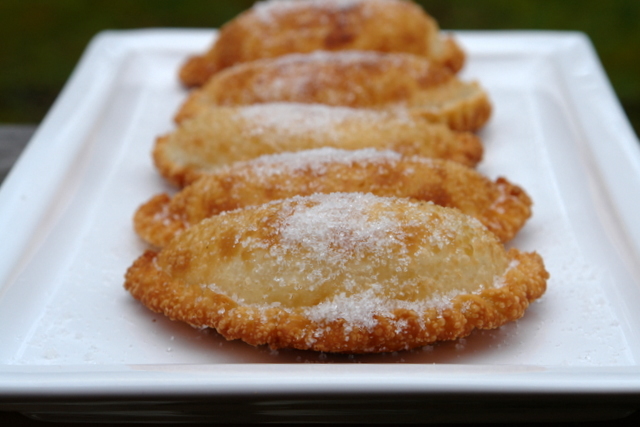
I guess it may be difficult to find fresh sorrel leaves in many countries. Here in Poland many people cultivate sorrel in their gardens and you can easily buy it in spring in the markt. I am a huge fan of three most common edible Polygonaceae: buckwheat, rhubarb and sorrel. I lately learned a wonderful Russian recipe for sorrel patties, called Пироги с щавелем. They taste... well sourish, and neither sweet nor salty, it is that kind of meal that you can serve with cream or sprinkled with sugar (analogically: in Poland people eat placki ziemniaczane / latkes / raw potato pancakes sprinkled with sugar; in Ecuador people eat empanadas de viento / patties with cheese and onion filling sprinkled with sugar). So don't be afraid of adding sugar to the sorrel filling. Remember: sorrel mixed with sugar tastes like rhubarb! :)

400 gr curd cheese / twaróg
2,5 cups flour
1/2 teaspoon sodium bicarbonate
1/2 teaspoon salt
6 teaspoons sugar
4 tablespoons sour cream
80 gr butter (melted)
1 egg
fresh sorrel leaves (about 400 gr) + sugar + few oil

1. Cut sorrel finely and place it in a bowl, sprinkle with few oil, cover and heat for 2 minutes in mictowave (sorrel will loose its fresh colour and reduce volume)

2. Press curd cheese through a sieve. Add sifted flour, sodium bicarbonate, salt, sugar, sour cream, melted butter and egg. Mix well.

3. Take a tomato-size ball of the dough, sprinkle with few flour just to be able to roll it. Put about 2 tablespoons of sorrel and 1 teaspoon of sugar on the top of rolled dough, hide the filling by closing the dough and form a croquette. Fry them and serve (possibly with sour cream or few sugar)
ps. they are DELICIOUS!!!!!

Tuesday, 7 April 2009

Belarussian champignon croquettes

Polish: pieczarki
Greek: ασπρομανίταρο
Hungarian: csiperkegomba
Lithuanian: pievagrybis
Catalan: xampinyó
Bulgarian: печурка
Russian: шампиньон
Croatian: sirnjača
Manx: shalmane

Champignons, just like every mushroom, are not especially rich in vitamins, proteins or minerals, but because of their taste they are often eaten in Poland and eastern Europe. I know Belorussian champignon croquettes from an old cookbook, which my grandmother gave to my mother. in poland people also make differrent champignon croquettes, but i prefer this Belarussian recipe. Грибные котлеты are very delicious!

500 gr champignons
1 onion
1 egg
few scallions
1 tablespoon dill
1 tablespoon parsley
1 clove garlic
a slice of bread
breadcrumbs (about 1/2 cup)

1. Cook champignons until they are soft (10-15 minutes). Coarsely chop onion and slightly fry it. Soak bread in few lukewarm water. Squeeze it.

2. Using meat grinder, grind cooked champignons, squeezed slice of bread, fried onion, dill, parsley, scallions and garlic. Having it together in a bowl, stir in 1 egg and spoon by spoon add breadcrumbs until the point that you'll be able to form and fry croquettes.

3. Form oval croquettes, roll them in breadcrumbs and fry. Serve with salad.


Tuesday, 24 March 2009

Polish Jews sweet matzo pancakes

Polish: maca
Slovakian: maces
Arabic: مصة
Hebrew: מצה
Dutch: matse
German: Matze
Russian: маца
Romanian: pască
Portuguese: matzá
Japanese: マッツァー

Many dishes of Polish Jews are today considered regional specialities, and same time Polish regional cuisine left influences in Jewish recipes. Matzo and challah are available in most Polish groceries; Bagels originates in Poland; raw potato fritters, stuffed goose necks, fish in almonds and raisins, red cabbage salad and noodle-curd pies are eaten commonly at Vistula river. Nevertheless, many Polish Jews dishes are today forgotten, but thanks God there still are old cookbooks :) Here is a great recipe for Polish Jews delicacy, sweet matzo pancakes, called chremzel.

100 gr matzo
50 gr almonds
50 gr sugar
4 eggs
200 ml wine
a pinch of salt
a pinch of baking powder
a drop of almond flavouring

1. Grind matzo and peeled almonds in coffee grinder. Heat wine with sugar (leave 3 tablespoons apart). Pour warm wine over ground matzo and almonds.

2. Beat yolks with resting sugar (those 3 tablespoons). Whisk egg whites with a pinch of salt until stiff. Combine yolks with wine matzo, almond flavouring and baking powder. Add stiff egg whites and slightly mix under matzo dough.

3. Fry small pancakes in oil. Sprinkle with icing sugar before serving.


Friday, 20 March 2009

Israeli olive oil bread rolls

Polish: oliwka
Romanian: măslină
Ligurian: auriva
Sicilian: aliva
Hausa: zàitùn
Basque: oliba
Kabyle: azemmur
Greek: ελιά
Caló: letaya
Hebrew: זית

To be honest, I hated olives and olive oil. My sister, after her travel to Valencia, brought to us a new habit of sprinkling bread with olive oil and juice squeezed directly with hands from a fresh tomato. I couldn't stand that taste until I went... to Chile. Once my lovely Chilean friends, Susy and Diego, bought a pack of olives for our trip at the sea side. I tried one reluctantly and... I fell in love :) Now I understand my friends who are able to eat the whole jar while going bakc home from the grocery, cause I sometimes do the same. But I don't care, they are healthy and delicious!
My brother bought 1 kg of black olives and I was wondering wether to eat them all, make tapenade or Palestinian ragout with olives and chicken... But yet I decided to try another recipe from Elizabeth Wolf-Cohen's book "Jüdische Küche", which my sister and brother-in-law gave me for Christmas. But I made some small changes in this recipe. If you love olives, try Israeli olive breads, לחם זיתים!

(for 9 buns)
350 gr flour
90 gr buckwheat flour
1 teaspoon sugar
1/2 teaspoon salt
1/2 teaspoon oregano
a pinch of pepper
2 tablespoons olive oil
1 tablespoon dried yeast
225 ml lukewarm water
300 gr black olives (pitted)

1. If you use bread machine (as I did), just pour the water to the recipient and add salt, sugar, oil, oregano, sieved flour and yeast and set for a kneading program. If you use your hands, put all dry ingredients into a bowl (sieve flours of course) and slowly add warm water and oil and knead. Cover and set in a warm place to let the dough grow (it takes about 1 hour)

2. When you are ready with 1st point, the dough is twice as big as it was while kneading, chop olives and knead the dough again, together with olives. Form buns (I made 9) and leave them for about 30 minutes to grow again.

3. You can eventually lightly cut your buns lenghtwise or make a cross with a knife. Bake about 20 minutes in 180C oven. And that's it!


Wednesday, 18 March 2009

Polish (Silesian) herring appetizer

Polish: śledź
Ukrainian: оселедець
Lithuanian: silkė
Faroese: sild
Mari: селедка
Manx: skeddan
Venetian: renga
Occitan: arenc
Korean: 청어
Indonesian: biang-biang

Hekele is a great Silesian appetizer made basically from herrings. Simple, healthy and delicious, eaten like a salad or with bread.

2 herring filets (mine were about 200 gr)
2 eggs
2 sour pickled cucumbers (about 100 gr)
1/2 onion
1 tablespoon mustard
salt, pepper

I guess my proportions are not proper, cause I should take twice or maybe thrice more herrings, but I personally prefer to not loose the taste of eggs.

1. Cut herrings into small chunks. Boil eggs until hard (about 8 minutes), peel cucumbers and onion, chop everything finely. Add mustard, season with pepper and optionally salt.

2. If you want to transform hekele into a wonderful salad, add few cooked and chopped potatoes and champignons.

I don't like mustard too much so I added 1 tablespoon of mustard and 1 tablespoon of mayonnaise :) That is why my hekele look so white :) Oh, and I decorated the whole plate with chopped chives.

A very similar herring salad is eaten in my family at a Christmas Supper. That is why I add this recipe to my Christmas Menu collection.

Tuesday, 17 March 2009

Belarussian sweet yeast buns

Sweet yeast buns, part 2.: Belarussian sour cream buns, cметанники (smetanniki). Very similar to vatrushki, but this dough is less fluffy, more like a typical bread roll and a bit less like a sweet yeast bun. Great for breakfast.

to make 16 buns

dough:
5 cups flour
30 gr fresh yeast
250 ml milk
3 eggs
1 cup milk
2/3 cup sugar
130 gr butter
1/2 teaspoon salt

filling:
1 cup sour cream
4 tablespoons butter (melted)
4 tablespoons flour
2 tablespoons sugar
(optionally 1 egg to smear the surface of buns before baking)

1. Melt yeast in warm milk. Add 2/3 cup flour, whisk to eliminate lumps and set in a warm place, waiting for bubbles.

2. Whisk eggs with sugar, add melted butter and the rest of the ingredients. Add flour at the end. Do it slowly and stop when the dough is not sticky anymore (it depends on the humidity of your flour, but it should be about 5 cups). knead and set aside in a warm place. When the dough is twice as big as it was just after kneading, knead it again and form buns. Just like in vatrushki recipe, make holes. leave buns to grow a bit more, spear with whisked egg (this time I didn't do it, but I recommend!), fill with sour cream filling (just combine together all the ingredients of the filling) and bake about 20 minutes in 180C oven.


Russian sweet yeast buns

Polish: drożdżówka
Turkish: çörek
Portuguese: pãozinho
Czech: houska
Russian: булочка
French: petit pain
Hebrew: לחמנייה

Ватрушки (vatrushki) are delicious Russian yeast buns, filled usually with fresh cheese, but also with jam, millet, potato puree or apple filling. This is the first of three sweet yeast buns recipe which I just baked: Russian cheese buns, Polish custard buns and Belarussian sour cream buns :)

(to make 8 buns)
dough:
400 gr flour
60 gr butter
60 gr sugar
2 eggs
yeast (25 gr fresh or 7 gr dried)
1/2 teaspoon salt
125 ml milk
1 teaspoon mayonnaise

filling:
250 gr fresh curd cheese (twaróg)
2 eggs (1 yolk separately)
25 gr icing sugar
1 pack vanilla sugar
1 tablespoon butter
1 tablespoon flour

1. Add yeast to warm milk. Set in a warm place for a short time (until it bubbles). After that, sieve flour and add the rest of the ingredients (all of them should be of a room temperature, that is imprescindible when you make a yeast dough!!!) and knead or put them in a bread machine (which I did).

If you do the dough with your own hands, knead until it is homogeneous and elastic. Set in a warm place until it doubles its surface and knead again.

2. Prepare the filling: press the cheese through a sieve, beat eggs with sugar and vanilla sugar (1 yolk waits separately!), add very soft butter, sieve flour and mix everything together.

3. Form apple-size buns. Press each bun with a bottom of a glass (previously, deep it in flour). Leave them for some time to grow again, spread with the resting yolk, fill with cheese and bake (about 20 minutes in 180C oven). Eat warm with a glass of milk.


Ukrainian sauerkraut pancakes

Polish: kiszona kapusta
Ukrainian: капуста квашена
Italian: crauti
Estonian: hapukapsas
Finnish: hapankaali
Romanian: varză acră
Albanian: lakra turshi
Luxembourgian: Sauermous
Slovak: kyslá kapusta
Dutch: zuurkool

Sauerkraut is absolutely beloved in Poland. I buy it often in a fresh-air-markt near to my home, together with sour red cabbage, sour gherkins and gherkin kvas (to prepare borscht or bread). This healthy cabbage is especially often eaten in the wintertime in the whole eastern, central and northern Europe. The recipe I am gonna show you now is just fantastic. It is a version of potato pancakes, placki ziemniaczane, brothers of Jewish latkes, but in this wonderful Ukrainian recipe, sauerkraut is added. I think I am addicted to oладки з квашеної капусти, potato-sauerkraut pancakes :)

for 6 big pancakes:
200 gr sauerkraut
500 gr potatoes (uncooked)
1 medium onion
few chives
1 egg
salt, pepper and caraway to taste
(if needed, also 1-2 tablespoons flour)

1. Chop sauerkraut, onion, chives and grind potatoes (I was too lazy and ground them in a meat grinder, which method I recommend as it works great even with raw potatoes). Put on a sieve and let the juice flow away. This is important!

2. Add whisked egg and seasoning. If there is still too much juice from potatoes and cabbage, you will have to add few flour.

3. Fry thin big pancakes and serve with sour cream

Tuesday, 16 September 2008

Russian rolled oats blintz

Polish: bliny
Russian: блины
Ukrainian: Млинці
Belarussian: бліны
Erzya: Пачалксеть
Lithuanian: blynai
Yiddish: בלינצע
Hebrew: בליני
Swedish: blinier
Japanese: ブリヌイ

What is the differrence between blintz, pancakes, crepes, naleśniki, galettes, palatsinken? Well... The main thing to remember is that blintz are always made with yeast. But remember, Central and East-Slavonic nations love all kind of fried batter cakes and know thousands of differrent recipes for them. In Russia, no-yeast crepe-like thin pancakes are called блинчики (blinchiki) and thick, smaller pancakes, often made with fruits or sour milk, are called oладьи (oladi). The most popular blintz are made of a mixture of buckwheat and wheat flour, but you can make blintz from ground rolled ots, millet flour or maize starch. You can serve them with sour cream or melted butter and caviar, herring, sturgeon or salmon meat, or on a sweet way: with honey or jam. I am gonna show you in this post Russian rolled oats blintz, Блины овсяные

2 1/2 cup rolled oats, finely ground (powder)
1 1/2 cup wheat flour
1/2 cup whipping cream
3 cups milk
30 gr fresh yeast
2 tablespoons sugar
2 tablespoons butter
3 eggs

1. Sift ground rolled oats and wheat flour into the bowl. Heat 1 cup milk (don't bring to boil!) and pour it over yeast and stir fast. Pour yeast milk on the flour. Add the rest of milk. Set in a warm place to grow.

2. Whisk eggs with sugar, melted butter and cream. Add to the dough and stir. Fry thin blintz on a saucepan without oil (or with just a drop of it).

Friday, 12 September 2008

Slovak potato pancakes (sweet or savoury)

Sepedi: tapola
Ruanda: ibiraya
Suahili: kiazi
Sestwana: lekwele
Bemba: ifyumbu
Shona: mbatátisi
Swazi: li-tábhane
Zulu: ilizambane
Xhosa: izambane
Hausa: dànkálȉ
Lingala: mbala
Maasai: ilpiasi

This is a small collection of "potato" in several African languages. Africa is known to be by far the most linguistically diverse continent. The number of African languages is usually put at around 2000 but it is difficult to estimate. I love languages and don't like to be "eurocentric" but for me it reslts quite difficult to find good african resources. But with potato, it worked :) Even if yam would be Africa's staple starchy root vegetable, not potato. While here, in Central Europe, potato is very, very important. And Slovakia is a country in the heart of Europe. And Slovak potato pancakes (lokše) are really tasty!

see also: Lithuanian potato fritters
see also: Slovak potato dumplings

1 kg potatoes
300 gr flour
1 egg
a pinch of salt

optionally:
+ vanilla sugar, icing sugar and apple mousse
+ slices of ham and grated cheese*

1. Cook potatoes, peel, mash and mix with flour and egg. Add a pinch of salt and, if they will beserved sweet with apple mousse or jam, you can add vanilla sugar (1 teaspoon or more)

2. Sprinkle your workplace with flour. Roll the dough thinly, as thin as you can. But beware, it is a hard work! Don't get descouraged cause the final result is really great!


3. Fry thin pancakes in few oil.

4.* There are some ways of serving savoury lokše. Here is one of them: leave one pancake on the pan and fry it only from 1 side. As quickly as you can, put a slice of ham and grated cheese (or slices of cheese) on 1 halve of the pancake. Cover with the secon halve, close the edges well by pushing them with a fork. Fry a bit more to be sure that the cheese inside melts.

(my version without ham)


(sweet lokše with apple jam)

Saturday, 30 August 2008

Rutabaga croquettes

Polish: brukiew
French: chou-navet
German: Kohlrübe / Steckrübe
Danish: kålroe
Icelandic: gulrófa
Russian: брюква
Estonian: kaalikas
Scottish english: neep
Japanese: スウェーデンかぶ
Thai: รูตาบากา

Rutabaga seems to be a very versatile vegetable and people from central Europe were eating them ages ago. During the IWW in Germany were written recipe-books with rutabaga recipes: rutabaga marmalade, rutabaga casseroles, rutabaga soups, false Sauerkraut, false apple mousse and even rutabaga coffee... "in the morning, rutabaga soup... in the afternoon, rutabaga steaks... in the evening, rutabaga cake"... So you can imagine why is this delicious vegetable so unpopular around here. In Warsaw you can never find them, in any supermarkt, at any markt, and for the first generation after the IIWW rutabaga is nothing but animal futter. Oh they just don't know how much do they loose... cause rutabaga tastes really great. Here is a proof, my own recipe for rutabaga croquettes.

see also: Kashubian rutabaga soup

(makes 10 croquettes)
1 cup cooked, mashed rutabaga*
1/2 cup grated cheese (Edam, Cheddar and so on)
1/2 cup rolled oats
1 egg
1 medium onion
some flour
some rolled oats
salt, pepper
optionally: some curry powder, some chopped dill

1. Chop onion finely and fry. Whisk the egg. Combine mashed rutabaga (* you can also take 4/5 cup rutabaga and 1/5 cup potatoes or of course change these proportions) with finely grated cheese, fried onion and rolled oats. Set in the fridge for 1 hour. Atfer that time add salt, pepper, (curry, dill) and 1/2 egg.

2. Prepare 3 plates: first with beaten egg (the resting half), second with flour and third with rolled oats. Form croquettes and roll them in flour, then in egg and at least in rolled oats. Fry and serve (warm or cold)