Showing posts with label Ingredient: flowers. Show all posts

Saturday, 25 April 2009

Dandelions!

Polish: mniszek
Slovakian: púpava
Upper Sorbian: mlóč
Czech: pampeliška
Ukrainian: кульбаба
Russian: одуванчик
Croatian: maslačak
Slovenian: regrat
Bulgarian: глухарче

I hope that other food lovers will forgive me that I lied when I said that spring means young beet and radish leaves. I really didn't mean to forget about dandelions, young nettles, violets and woodruff. I just spent a weekend at my grandparents' village and I am so relaxed and happy, with a bag full of ecological fresh dandelion greens. I collected them thinking about Swiss dandelion pie, quiche dent-de-lion. Of course, as a true soups lover, I was experimenting with dandelion soup, too. Pictures below.

pie shell:
200 g flour
1 teaspoon salt
80 g butter (cold!)
50 ml (cold!) water

filling:
50 g dandelion leaves (chopped)
100 g camembert cheese
100 ml 30% cream
200 ml milk
3 eggs
1/2 teaspoon salt
few freshly ground nutmeg

1. Prepare the pie shell by kneading rapidly all the ingredients (they have to be cold, as said above). make a ball and leave in the fridge (min.30 minutes!)

2. Prepare the filling: beat eggs with milk and cream, add finally chopped camembert, salt, nutmeg (pepper, paprika) and chopped dandelion leaves.

3. Cover your pyrex dish or baking tray with few butter, roll thinly the dough and place in the dish, pick several times with a fork and pour egg-dandelion filling. Bake about 30 minutes in 180C oven. I guess that meat-eaters could add some cubes of ham or favourite sausage to the filling. This pie can also be made with fresh spinach or (especially) bear's garlic (ramsons).


A dandelion leaves soup was very easy to make. I was actually looking for some traditional regional dandelion soup recipe, but I didn'y find any, so I used my imagination and chopped some handfuls of dandelion leaves, 3 onions, 6 small potatoes, fried raw vegetables, cooked in homemade vegetable broth and thickned with sour cream mixed with fat countryside milk and 1 tablespoon of flour. It tastes nicely sourish and bitter and a bit like spinach and this is how it looks like:


And, one of the most important things to do in spring is to collect dandelion blooms! don't forget to do it right now to prepare dandelion syrup! (recipe available here)

Friday, 8 August 2008

Swedish rosehip dessert soup

Polish: owoc dzikiej rozy
French: cynorrhodon
Armenian: Մասրենի
Luxembourgian: Mullebutz
Hungarian: csipkebogyó
Finnish: ruusunmarja
Catalan: gavarró
Russian: Шиповник
Breton: agroazenn
Danish: hyben

Summer is a great time. From now until October you can pick rosehips and prepare yourself this delicious nutritive thick sweet velvety soup. The recipe comes from Sweden, where rosehip soup is called nyponsoppa and is very popular, even ready to buy in tetra boxes in supermarkts.

see also: Polish rosehip dessert
see also: Turkish rosehip-meatballs soup
see also: German elderberry soup

1l ripe rosehips
1l water
sugar (about 4-5 tablespoons)
vanilla stick
(optionally heavy, sour or whipped cream)
almond flakes, raisins, little almond cookies (amarettini)


1. Wash rosehips, cut into halves and pour into boiling water with vanilla stick. Cook on a low heat until rosehips are soft (it takes about 30 minutes). Put rosehips aside and keep the water in which they were cooked.

2. Press rosehips trough a fine sieve. Keep rosehip puree in a bowl and pour the rest (peels and stones) back to the rosehip water. Cook again and strain, it should be quite thick. Take 3 amounts of this rosehip water to 1 amount of rosehip puree, add sugar to taste and it should be thick enough. if not, add more rosehip puree. It takes a bit more time than cooking rosehips and adding cornstarch but the soup has a rich intensive taste due to this proceedings.


I am not sure if Swedes eat their sweet fruity soup just like Poles, in the summertime as a light dinner, or rather as a dessert. Anyway, serve with heavy, sour or whipped cream (if you like), sprinkle with raisins, almond flakes and amarettini.


What to do with the rest of rosehip puree? heat it in a saucepan with vanilla mark and 2 tablespoons butter. You will receive a delicious breakfast spread :)


Thursday, 3 July 2008

Lime tree blossoms syrup

Polish: lipa
Hungarian: hársfa
Catalan: tell
Finnish: lehmus
Estonian: pärn
Ukrainian: Липа
Chinese: 椴树
Basque: ezki
Vietnamese: chi đoạn
Persian: نمدار
Danish: lind

Rose petals, robinia blossoms and dandelions are gone, sweet woodruff starts blooming so is since then useless in this season, elderberries grow instead of elder blossoms but still I have one suggestion for all those who will dream in the cold winter evenings about some sweet delicious homemade blossom syrup in their tea, instead of sugar: lime tree (linden) blossoms. Great for all who bear with sleepless nights, cause just like lime tree blossoms tea, this syrup helps relaxing and brings sound sleep. Lime tree blossoms syrup is to be prepared this way:

3 cups sugar
1 1/2 cup water
1/2 cup lemon juice
optionally: one orange
2-3 cups lime tree blossoms


(uncleaned blossoms)

1. Clean lime tree blossoms from the resmaining leaves. I know it sounds hard and takes some time, but you need only the blossoms. Leave them on a white sheet of papter for about 1 hour so that all the tiny insects leave their homes. It is important to gather the blossoms from clean, non-polluted areas away from the contamination, cause basically you shouldn't wash them to preserve pollen!
2. Cook a syrup from sugar, water and lemon juice. Leave for some time (let's say, about 1/2h) on a low heat to thicken. Take away from the heat and Set aside to cool downs

3. When the syrup is lukewarm and the blossoms clean from insects, put the blossoms into the syrup. You can add slices of orange (with or without peel, depending on the quality of the orange and your personal taste) to taste or add some more lemon juice according to your palate. Cover and put in the fridge for 3-5 days


4. Strain well, squeeze lemon slices, bring to boil, pour into clean bottles.

ps. There is no picture of the syrup in the bottle. it just looks the same as sweet woodruff syrup... golden and thick.

Friday, 13 June 2008

German sweet woodruff syrup

Polish: przytulia wonna / marzanka wonna
Upper Sorbian: wonjaty sydrik
Platt: Möösch
Estonian: lõhnav madar
Icelandic: ilmmaðra
Japanese: クルマバソウ
Manx: lus vollagh
Italian: caglio odoroso / stellina odorosa
Slovak: marinka voňavá
Danish: skovmærke


(pic taken from the net)

Sweet woodruff is a smell and taste of German spring and summer season. At the beginning I thought that Waldmeister mean nothing but forester (yeah, artificially flavoured and coloured green "forester" ice cream, cheesecakes and puddings :P) But yes, now I finally know the incredible sweet woodruff. I found it in a forest next to the Baltic coast. If you have a chance, collect some and prepare this sweet woodruff syrup (Waldmeistersirup), so popular in Germany. You can drink it with water, pour over pancakes or ice cream or, just like some Germans do, add to beer or mix with other alcohol (but I am not a specialist in this area so I can't give you many tipps, sorry...)

I will share now two recieps with you. First using sugar and second: honey and apple juice.


1st recipe
1 bunch sweet woodruff (only the one that is not blooming yet!)
4 cups sugar
2 cups water
1/2 cup lemon juice (+ 1 teaspoon citric acid)

1. Cook a syrup from water, sugar, lemon juice and citric acid.

2. When the syrup is cool, pour into a bottle and deep sweet woodruff in it. Let stand for about 5 days in the fridge or any other cool place


(sweet woodruff macerating in sugar syrup)

3. After 5 days, divide the plant from the syrup. Close the syrup in the bottle. In Germany people would add few drops of green food colouring, since there everything related with sweet woodruff should be green. You can do it as well :)

2nd recipe
1/2 l apple juice (without sugar!)
250 g honey
1 bunch sweet woodruff

1. Deep woodruff in apple juice for 20 minutes. After this time, divide juice from the plant

2. In a saucepan, cook (very short!) apple-woodfuff juice with honey. Still hot, fill the bottle. To prepare a delicious drink, dissolve 1 part of apple-sweet woodruff syrup in 4 parts mineral water.

Tuesday, 3 June 2008

Polish black locust fritters

Polish: robinia akacjowa / grochodrzew
Upper Sorbian: běła robinija
Korean: 아까시나무
Serbian: багрем
Romanian: salcâm
Vietnamese: dương hòe
Czech: trnovník akát
Slovakian: agát biely
Ukrainian: біла акація
French: robinier faux-acacia

Black locust is a grateful tree. Belongs to the pea family and is improperly called acacia (but caling it false acacia is true, following the latin name robinia pseudoacacia). Probably you often have a walk around your country plot and smell its intensive aroma and you even never thought that you could pick some and prepare delicious fritters. In my homeland, Poland, black locust fritters (racuchy akacjowe) are maybe not the most common sweet snack, but belong to the most favourite childhood memories of the summertime in the countryside and people still willingly prepare them in the springtime, if they only can find black locust tree away from the contamination of big cities and cars. There are several recipes to prepare this great breakfast dish or sweet evening snack; here is mine:

1 cup* black locust flowers**
1 apple (should be sour!)
1 cup flour
1 teaspoon baking powder
1 cup condensed milk (7,5% or 10% fat)***
1 egg yolk
1 pack vanilla sugar
salt

1*. After collecting black locust, what you have to do is to switch on some interesting film so that in the emantime you can divide flowers from the panicles. Some people (see elder flower pancakes recipe) just deep the whole panicles in the batter. You can do it of course but a) it won't taste that good, b) black locust is generally considered toxic, with the exception of the flowers!


2. Beat egg yolk with vanilla sugar and a bit of salt. Add condensed milk (3,5% whole milk or yoghurt can be used instead***).

3. Swift flour with baking powder and add to the milk-yolk cream

4. Peel apple and cut into tiny chunks or grate it. Apple is important to add somesour taste; otherwise, fritters taste a bit insipid (some say that similar to soap :P) Mix with the batter and add black locust flowers. I once added a handful of chopped rose petals** to make the fritters look more colourful ( observed no differrence in taste). Mix everything well and fry.


(black locust fritters with rose petals**)

Wednesday, 28 May 2008

Polish elder pancakes

Polish: bez czarny
Upper Sorbian: hołdračk
Bosnian: zovha
Arabic: بيلسان
Occitan: saüc
Albanian: shtogu
Galician: bieito
Lithuanian: juoduogis šeivamedis
Quechua: yana rayan
Cornish: skawenn

When you smell black elder's blossoms during an evening walk, you know it's late spring. In Poland the blossoms are fried in a batter and eaten with powdered sugar; in north Germany a soup from the berries is very popular; in Romania you can even buy a kind of Fanta with elderbery taste, and in Hungary elderberry brandy; in central Europe it is quite common to prepare a thick syrup from the blossom and lemon juice; you drink it dissolved with water or add to flavour your tea. Blossoms are dried and prepared as an infusion, too. This spring I dried some panicles which I am gonna drink in the wintertime, I also made a syrup and pancakes from the elder. Today I am gonna share the recipes for the elder pancakes, in Polish: placki z kwiatow bzu.

1 cup flour & 1 teaspoon baking powder
1/2 cup milk
1/2 cup sparkling, carbonated water
1 small pack vanilla sugar
1 egg white
1/2 - 1 cup elder blossoms
(eventually: 1 tablespoon lemon juice)

1. "Crumble" the panicles of elder to separate blossoms from the stalks. Some people deep the whole panicles into the batter but the taste of the stalks can destroy the whole pancake... I mean, in my opinion my way of making pancakes is much better than the fritters-methode... But it's up to you... My advice is to use blossoms only. It takes some more time but it is worth it! When you choose ripe paniles, blossoms will divide easily from the stalks!

2. Sift the flour with baking powder. Add water, milk and vanilla sugar. Combine. Beat the egg white and add gently to the batter. Add elder blossoms, they should be all covered with the batter. Now you can add lemon juice, too.

3. Fry! Just like regular pancakes. Serve sprinkled with powdered sugar, with homemade marmalade, honey, butter, maple syrup, dandelion syrup, manjar (How to do this Latin American spread? You can learn it from my recipe for Peruvian suspiro), nutella... So many possibilities!


Tuesday, 13 May 2008

Polish spring dandelion syrup

Polish: mniszek
Ossetian: Къаппа-къуппа
Upper Sorbian: mlóč
Old Prussian: pėinė
Ukrainian: Кульбаба лікарськ
Estonian: võilill
Faroese: Vanlig várhagasólja
Basque: txuntxumela
Aymara: qhanapaku
Luxembourgian: Bettseechesch
Persian: قاصدک


(pic taken from wikipedia)

May is the only month here in Central Europe to collect dandelions. There are so many reasons to collect them! To decorate your living-room sunny-yellowish or to several culinary purposes: false capers from dandelion buds, salad from leaves, kind-of-honey, lemonade and marmalade from flowers, kind-of-coffee even... yes, from roasted roots... and even alcoholic drinks (liqueur or something like this, I am thegreatest dabbler of the world about alcohol). Anyway, we are in the middle of spring here now so if any of you have a meadow or a lea full of dandelion somewhere around, don't hesitate and dedicate oe morning (this is very important: collected in the morning and in the sun, dandelions will contain pollen and nectar!) to collect dandelion blossoms! You will need three days to prepare the dandelion syrup, called in Poland sometimes miodek majowy (may honey) but it is worth it!

500 dandelion blossoms :D
1 lemon
1 orange
1 kg sugar

1st day
- Collect dandelion blossoms, as already said, before noon. If you find yellow stains on your fingers it means, there are pollens in your dandelions and that means the syrup will be tasty and healthy :P At home, let the flowers rest for one hour on a white paper, so that all the tiny insects could leave their homes. Don't wash!


- Leave dandelions in 1 liter water, together with orange and lemon slices. You can peel the fruits or cut with their skins (if bio) and cook for about 15 minutes. Leave.

2nd day
- Drain the flowers very, very, very wel, using a drainer and a spoon. Add sugar and cook 1-2 hours on a medium heat.

3rd day
- Cook again, for about half an hour or until you receive your beloved thickness.

- Stir into glasses, close them and then... eat on a toast together with frish cheese or butter or take a spoon to sweeten your tea!


I hope that the recipe is clear. If not, leave your question in the "comments" field and I will answer quickly. There are some more ways to use dandelions in the kitchen; even if at the moment I have no good camara, I will tell and show you how to prepare some more flower food soon!

Friday, 1 February 2008

Polish rosehip dessert

Polish: owoce dzikiej róży
Japanese: ローズヒップ
Swedish: nypon
Catalan: cinoròdon
German: Hagebutte
Spanish: escaramujo
Dutch: rozenbottel
Hungarian: csipkebogyó
Armenian: Մասրենին
Finnish: ruusunmarja
Danish: hyben
Czech: šípky

Rosehips are extremely rich in vitamin C and other vitamins and minerals. Even chinchillas enjoy eating them, not mentioning me. When I was a child, my parents were buying a rosehip nectar to me. I remember this taste, something unforgettable. During my studies at the German Baltic coast, I was gathering rosehips and petals from the beach bushes and preparing juices and jams, and I managed to recovery the childhood memory about rosehip nectar. This time I thought I could make a jelly, too. In Polish, we call it kisiel z owocow dzikiej rozy. Swedish rosehip soup would be the next :)

see also: Swedish rosehip soup

about 1 liter rosehips
water
3 spoons potato starch

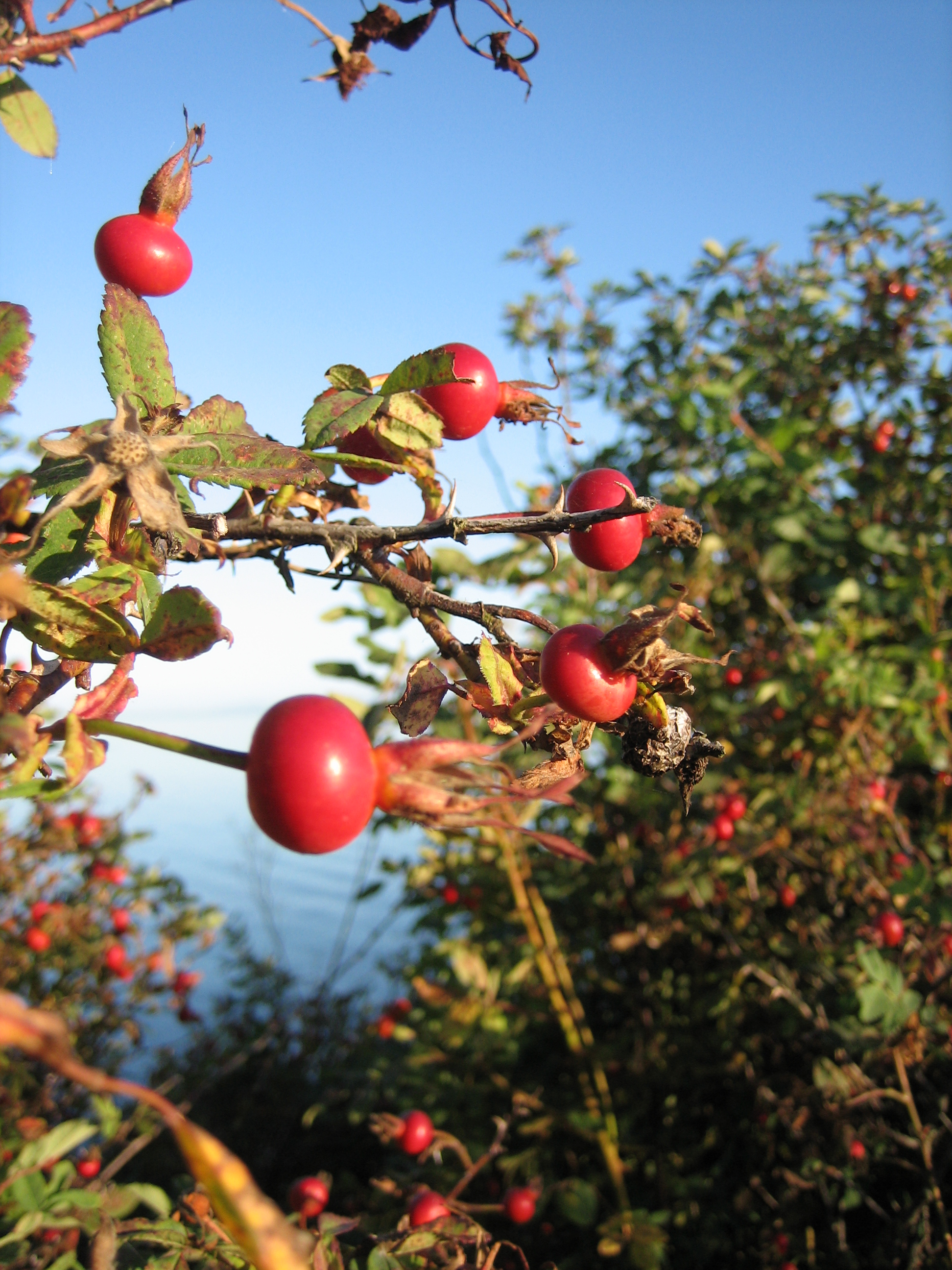
1. After picking rosehips (choose big round fleshy rosehips, just like those above), don't clean them from the seeds, just wash them and don't cut


(this picture is from Wikipedia: http://upload.wikimedia.org/wikipedia/commons/7/74/Rose_hip.JPG. I

2. Put rosehips in a pot and add so much water just to cover fruits, not more. Cook for 20-30 minutes. Fruits have to be soft and water should be orange.

3. Drain. Now you have a delicious rose juice that needs no sugar cause is very sweet and tastes great, and also rosehips which you can use to make a jam. Just rub through a sieve to divide skins and stones from fruit pulp. Boil the pulp with as much sugar as you like and add a bit of lemon juice. Rosehip jam is ready!

4. Back to the jelly. My proportions are 3 spoons potato starch to 2 cups rosehip juice. Boil 1,5 cup juice and aside melt potato flour in 0,5 cup juice. When flour has combined with juice, take the pot from the heat, add flour juice and mix fast. When homogeneous, heat again until bubbles appear. Serve with yoghurt, sour cream or whipped sweet cream.