Showing posts with label Ingredient: fruits. Show all posts

Sunday, 5 April 2009

Lithuanian apple cookies

Polish: jabłko
Amharic: ፖም
Hausa: áfùl
Kirundi: ipome
Malagasy: pôma
Sesotho: apole
Shona: ápuro
SiSwati: li-hhábhula
Somali: tufaax
Wolof: pom

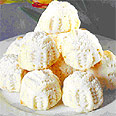
Apples are the most common fruits in central and eastern Europe, but I guess quite rare in Africa. For language lovers, apple in Polish and several african languages, and for apple lovers - delicious, soft Lithuanian apple cookies, obuoliniai sausainiai (they taste like soft thick fluffy biscuit omelettes; they'll melt in your mouth!)

(to make about 12 cookies)
125 gr flour
1 teaspoon baking soda
1 egg
70 gr sugar
1 teaspoon vanilla sugar and/or 1/2 teaspoon cinnamon
1 tablespoon sour cream
1/4 cup oil
a pinch of salt
300 gr apples
1 tablespoon lemon juice
icing sugar to sprinkle

1. Peel apples, cut into small cubes and sprinkle with lemon juice

2. Beat egg with sugar, vanilla sugar, cinnamon and salt. Add sour cream and oil and continue beating.

3. Sieve flour with baking soda, add beaten eggs and apple cubes.

4. Cover a baking tray with baking paper. Place tablespoons of the batter on the tray. Bake 15-20 minutes in 180C oven (they should be lovely brownish on the top). Cool down and sprinkle with icing sugar (optionally: mixed with ground cinnamon)

Sunday, 22 March 2009

Israeli date pastries

Polish: daktyl
Portuguese: tâmara
Xhosa: umhla
Sicilian: rattula
Romanian: curmală
Azeri: xurma
Arabic: تَمْر
Kurdish: salroj
Malay: buah kurma
Mokshan: fig

Mammouls are delicious stuffed pastries, eaten in the whole Near East. They can be filled with dates, walnuts, pistachios, dates with sesame seeds and so on. they are a festivity cookie, eaten (depends on religion of the eater and on the filling) during Easter, Ramadan, Hanukkah and Purim. I ate once great Lebanese mammouls with pistachio filling in the most important moment of my life and that is why I will never forget its taste. Again, using great Elizabeth Wolf-Cohen's book "Jüdische Küche", I prepared Israeli mammouls (מעמול) with date filling and they were incredibly tasty and similar to the Lebanese ones I ate. However, Jewish and Arab recipes differ and I will show you Arab recipe another day, too.

(to make 12 pastries)
175 gr flour
2 tablespoons sugar
2 tablespoons milk
1+1 tablespoon orange blossom essence
90 gr soft butter
100 gr pitted dried dates
icing sugar to sprinkle

1. Combine flour with sugar. Add milk, orange water and butter and knead. Optionally, add few more milk but don't add too much cause the dough can't be sticky! Form walnut-size balls (I made 12).

2. Prepare the filling: chop dates finely and add orange blossom water (or optionally a bit of water to make the consistency better, but I just soaked dried dates in water before chopping them and it made everything easier, I simply strained them and chopped)

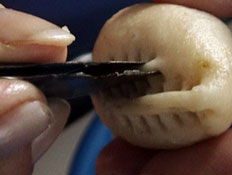
3. With your fingers, make a hole in dough balls and stuff each ball with a teaspoon of the filling. Close the balls and form them anyhow you wish. Mammouls can be formed with special wooden molds like these or you can shape them in your hands with a help of tongs (see also here , here and here). To inspire yourself, take a look at these pics: 1, 2, 3, 4, 5, 6.
And here are my no-mould-no-tongs-hand-made mammouls :)


ps. my mum asked me to make mammouls with our homemade chokeberry jam as a filling. I guess I'd like to experiment, I am sure it would taste great!

Monday, 9 March 2009

French (+ Jewish) pear tarte

Polish: gruszka
Cree: ᑳᔒᐅᐯᒋᓯᑦ
Blackfoot: ómahkínaotohton
Cheyenne: éškôsa'ehe
Quechua: pira
Mohawk: katshe'kahik
Guarani: yvavo’ĩ
Papago: pihlas
Maliseet: sikusq

Happy Women's Day! I know it was yesterday but better later than never! I wish all the best to all the women of the world, and especially to food lovers and guests on my blog! i baked something for you - a great French pear-almond tart (tarte aux poires et amandes), I usually try to use season fruits and vegetables but I just wanted so much to eat this tarte yesterday that I had to prepare it :) I took this recipe from a great book written by Elizabeth Wolf-Cohen titled "Jüdische Küche".

175 gr flour
1/2 teaspoon salt
4 tablespoons icing sugar
120 gr butter (or, as suggested in the book, parve margarine)
2 egg yolks (+ 1 tablespoom cold water)
2 eggs
50 gr sugar
90 gr ground almonds + 2 tablespoon sliced almonds
few drops almond aroma
2 big pears (about 500 gr)

1. Prepare the pie crust pastry: knead flour, icing sugar, salt, butter / margarine and 2 yolks whisked with 1 tablespoon cold water. Cover with paper and set in the fridge for 2-3 hours (or better overnight)

2. Butter a tarte-form and sprinkle with flour, roll the dough and fill the form. Put a sheet of baking paper on it and spread some beans to bake blind . Bake 10-15 minutes in 200C

3. Peel pears and cut into thin slices and arrange them on the baked shell. Separate yolks and whites from 2 left eggs. Beat yolks with sugar until almost white and fluffy, add ground almonds and aroma. Whisk whites until stiff. Add to yolk cream and pour over pears. Sprinkle with almond flakes. Bake about 30 minutes in 180C. I recommend to cover the tarte with baking paper to prevent excessive toasting of the top of the tarte. It smells delicious and tastes really really great! We ate it just as it was, au naturel :P but I guess a great idea would be serving it with vanilla sauce, whipped cream or ice-cream!


Saturday, 28 February 2009

Russian cranberry kvas

Polish: żurawina
Mari: турнявӧчыж
Hungarian: tőzegáfonya
Inupiaq: qunmun asriaq
Lithuanian: Spanguolė
Ukrainian: журавлина
Karelian: karpalo
Vepsian: garbol
Estonian: jõhvikas
Frisian: feanbei

My today's hero is cranberry. This red small round fruit is actually even called a superfruit due to its nutrient content and antioxidant qualities. Three huge northern countries use this fruit in an interesting way. Canada and USA have their cranberry sauce, muffins, compotes, jellies, cakes and wine, while Russians... well I think I discovered only a low percent of Russian cranberry recipes, besides cranberry kissel all of them are exotic and worth trying, just imagine: cranberry-vegetables-fish cold soup, differrent vegetable salads with cranberries, fish or chicken baked with cranberies, cranberry-wheat drink, patties with cranberry filling, cranberry pancakes, cranberry meringue, cranberry infusion and so on... I will surely try some of them, especially because I adore cranberries but I usually only eat dried cranberries as a snack or buy cranberry ice cream, and because my first meeting with Russian cranberry recipes was successful. I made cranberry kvas (квас клюквенный).

1 kg (fresh, not dried!) cranberries
500 gr sugar
40 gr yeast
5 l water

Wash berries carefully, set in a saucepan and pour boiling water over them. Boil until berries break up. Separate friots from the water. Take 1 cup of cranberry water and mix with yeast to dissolve it. Add sugar and a cup with dissolved yeast to the rest of cranberry water. Set aside for several days until bubbles appear.


After that, pour kvas into bottles and store in a cool place few days before drinking.

Monday, 23 February 2009

Swiss mirabelle tarte

Polish: mirabelka
Spanish: ciruela amarilla
Persian: آلو قطره‌طلا
Portuguese: mirabela
Austrian German: Kriecherl
Romanian: corcoduş
Swedish: mirabelle
Russian: мирабель

Mirabelle is the oldest kind of plums. My father makes a delicious mirabelle syrup which we drink later during cold winter dark evenings, and my mum prepares wonderful mirabelle jam, sweet and sour.


It is not a season to buy mirabelles now, you will have to wait until next late summer, but if you like these yellow small plums, don't forget to try Swiss mirabelle tarte, Mirabellenwähe!

150 gr flour
50 gr ground almonds (almond flour) + 3 tablespoons (separately)
1 teaspoon sugar
1/2 teaspoon salt
80 gr butter
1 kg mirabellen (weight with seeds)
50 ml milk
150 gr cream cheese
2 eggs
3 tablespoons sugar + 3 tablespoons vanilla sugar
icing sugar to sprinkle

1. Sieve flour, add ground almonds, sugar, salt and cold butter. Knead fast while adding 5 tablespoons water. Leave in the fridge for 1/2 hour (or more, can be left overnight) and after that, fill the tarte mold with the dough.

2. Throw the seeds from mirabelles away. Spread 3 tablespoons of ground almonds over the dough (which is already in the mold) and put mirabelles on it.

3. Mix milk, cream cheese, eggs and both kinds of sugar together. pour over mirabelles. Bake about 50 minutes in 180 C oven (or until the top is golden)


Tuesday, 16 September 2008

Portuguese papaya flan

Polish: papaja
Vietnamese: đu đủ
Tongan: lesi
Thai: มะละกอ
Yucatec Maya: put
Zulu: uphopho
Portuguese: mamão
Malayalam: പപ്പായ
Bahasa Melayu: betik
Telugu: బొప్పాయి

Crème caramel, flan, flam, bánh flan, leche flan, pudim de ovos, caramel custard - this dessert is a celebrity, worldwide beloved. I was never a fan of it cause I never ate a really delicious one, probably. Here in Central Europe other custard and pudding-like desserts are eaten. So I decided to prepare a flan on my own. With papaya flavour :) The technique was interesting, expectations were high and results... won out! Make yourself this Portuguese papaya flan, pudim de papaia, it's worth your effort!

(makes 4 small portions or 1 big)
1 medium papaya, not ripe!
3 eggs
50 gr flour
150 ml milk
100 gr butter
400 gr sugar
(+ more sugar to prepare caramel)
zest of 1/2 lemon (ground)
(+ you will need 1 big or 3-4 small bowls which are suitable to bain-marie cooking, and 1 big tray for the water!)

1. Peel papaya and cook it until soft (check with a fork constantly! It doesn't take much time!). When ready, drain it, throw the seeds away and press through a sieve or puree the fruit.


2. Combine milk, flour and lemon zest. Add to papaya puree.

3. Whisk eggs with sugar. Add melted butter. Add to papaya puree and stir well.

4. Prepare caramel: pour sugar into the saucepan (I tool about 1/2 cup, but here the measurements are not that important... if you have a ready, bought liquid caramel, you can probably use it too), add a little bit of water (2-3 tablespoons or more) and stir on a low heat until you have caramel. When still warm and liquid, pour it into the bowl (one big or 3-4 small ones) and move the dish the way so that its walls are covered with caramel. Pour papaya cream into the bowl(s), place it in the tray with water and place the tray (with water and bowl(s) in the oven. Bake 30 minutes in 180C. When still warm, take off from the bowl(s) and serve.


Tuesday, 2 September 2008

German elderberry soup

Polish: bez czarny
Manx: berrish hrammanagh
Persian: آقطی سیاه
Turkish: kara mürver
Bosnian: zohva
Russian: бузина черная
German: Holunder
Basque: intsusa
Italian: sambuco nero
Swedish: fläder

Holunderbeerensuppe / Fliederbeersuppe is a kind of late summer-autumn north German delicacy. Must be made from very ripe elderberries; if the winter is not frosty people enjoy elderberry soup even in the wintertime. As a rule, elderberry juice tastes tart but after some sesoning it becomes deep fruity rich flavour.

(3-4 portions)
1l elderberries
1l water
1 pack vanilla sugar (or vanilla stick) + more sugar to taste
2-3 cloves
1 stick cinnamon
1 teaspoon lemon juice (i added instead a teaspoon of freshly made sea-buckthorn juice)
a zest from 1/2 lemon
1 apple, 1 pear
1 tablespoon potato starch

1. Wash berries, take off from the stalks and measure about 1 liter. Cook them in 1 liter water for about 20 minutes (until they soften and break). Press through a sieve and throw the seeds and rests away. Pour into the saucepan again. Add vanilla stick/sugar, cinnamon stick, lemon zest, cloves, lemon juice and sugar to taste. bring to boil. if it is still too tart for you, add 1/2 cup apple juice.

2. Mix potato starch with a little bit of water and add to the soup. Whisk well and boil. Lower the heat.

3. Peel apple and pear (throw seeds away), cut into slices. Add to the soup.


Advice:
Usually this soup is eaten with milk-semolina balls, but I don't like them. You can serve your soup plain, with noodles (for instance ribbons), with crepes cut into long noodles or with semolina balls (Grießklößchen). How to prepare them? Cook thick semolina in milk or milk mixed with water with a pinch of sat and vanilla sugar. Add egg (half egg, one egg or more, depending on how much semolina dough you have) and cook them in water. When ready, put on the soups surface and let them swim :) Some people cook them directly in the soup but it's up to you.

Tuesday, 15 July 2008

Polish bilberry dumplings

Polish: czarna borówka / jagoda
Lithuanian: mėlynė
Ukrainian: Чорниця
Estonian: mustikas
Northern Sami: sarri
Saterland Frisian: bikbäie
Catalan: nabiu
Irish: sméar gorm
Turkish: yaban mersini
Welsh: llus

Bilberries are one of the most favourite summer fruits of Poland. Depending on the region they are called jagody, czarne borówki, czerniny, jagodziny, czernice... The list is long :) You can buy them on a markt but many people collect them on their own in the forest, just like they do with differrent types of mushrooms. Then you can only bake bilberry muffins or typical sweet yeast buns called jagodzianki, prepare bilberry soup, kissel, jelly, cheesecake, eat bilberries with whipped cream or blended in a smoothie, with noodles and cream or as a filling to the most beloved dumplings, called pierogi. I am gonna share with you today this delicious summer recipe: pierogi z jagodami, Polish dumplings with bilberries!

(for about 20 dumplings)
dough:
1 cup flour
1/3 cup hot water
a pinch of salt
filling:
1 cup bilberries*
1 tablespoon sugar
1 tablespoon dried breadcrumbs
+ 1/2 cup sour cream
+ flour to roll

1. Sieve flour into a bowl. Pour boiling water over it and knead when it becomes bearable to handle. Add salt and knead until elastic and homogeneous. Set in fridge for 1 hour to rest.

2. For the filling, mix berries with sugar and breadcrumbs. Without breadcrumbs the filling may flow while cooking and will splash while eating all the time :)

3. Sprinkle your workplace with flour. Roll the dough so thin as only possible and using a glass, cut circles out. You may also take a bit of dough (walnut size), roll it in your hands and then roll thinly to obtain same circles

4. Fill each circle with 1/2-1 (depending on how big is your circle) teaspoon bilberry mix and join both sides of teh dough to form half-moons. You may decorate the rands the way I did or by pressing them with a fork.


5. Put the dumplings into boiling and salted water and cook 5 minutes. The dough is thin so they are ready so fast. Drain and serve with sour cream sprinkled with sugar.


*Nota bene:
you can use other fruits, too: raspberries, brambles, strawberries, sweet or sour cherries

Wednesday, 9 July 2008

Austrian apricot dumplings

Polish: morela
Armenian: ծիրան
Albanian: kajsi
Tajik: зардолу
Kannada: გარგარი
Greek: βερικοκιά
Chech: meruňka
Mongolian: чангаанз
Kurdish: mijmij / qeysî
Uzbek: o'rik

I don't know any recipe how to prepare prunus armeniaca in Armenian way... (suggestions more than welcome!) but for sure, one of the most delicious ways of eating apricots is Austrian Marillenknödel in Butterbröseln: apricots hidden in creamy dumpling, cooked and coated in roasted breadcrumbs. Attention! This dough is different than the one in strawberry dumplings recipe! That dough was more fluffy, light and very delicious but unluckily didn't form solid balls after cooking. If visual effects are important to you, choose this dough ;) (In Poland, Germany and Slovakia similar dumplings are prepared, but with potatoes as one of the ingredients of the dough. I will post some recipes for them soon!)

see also: Austrian strawberry dumplings

dough
200 g flour
250 g Quark (in Austria: Topfen) or fresh cheese curd of 20% fat
4 tablespoons semolina
1 egg
100 g butter
a pinch of salt
a bit of flour

filling
8 medium apricots (fresh!)*
8 cubes sugar* (the best would be brown)
50 gr butter + 1/2 cup dried breadcrumbs
powdered sugar

1. In the evening prepare the dough: combine all the ingredients and leave in the fridge overnight

2. Wash apricots, cut slightly just to take the seed off. Put 1 cube sugar into each apricot (if you don't have them, take 1 teaspoon sugar instead of each sugar cube, but never use honey! It will flow away and you will be unable to close the apricot in the dough)


3. In a pan, bring water with a bit of salt and oil to boil. Divide the dough into 8 equal portions (dough balls should be about the size of apricots - see picture above), form balls and roll them. Cover each apricot with a dough "pancake" and roll well in yur hands until you get lovely shaped balls. Put into the saucepan and cook 12-15 minutes.

4. Put dried breadcrumbs and butter (you can add a pinch of cinnamon too) into another pan. butter should melt and breadcrumbs should fry in it until golden. When dumplings are ready, drain them well and put into the pan with breadcrumbs and butter. Move the pan this way so that the whole dumplings are covered with breadcrumbs. Put on the plate and sprinkle with powdered sugar; you can serve them with cream or vanilla ice-cream.

* of course you may have bigger or smaller apricots... the main rule is: so many sugar cubes as many apricots you have. I also suggest to not take the huge, apple-sized apricots. Walnut-sized are perfect.


Thursday, 3 April 2008

Polish apples in jackets

Polish: jabłko
Mohawk: sewahyowane
Blackfoot: ápasstaamiinaamm
Navaho: belasana
Anglonquin: waabimin
Ossetian: фæткъуы
Inuktitut: kimminaujaq
Polabian: jobkú
Votic: õuna
Livonian: umar

Apples are everywhere! In English in pineapple and aubergine (mad apple is one of its synonys), in French in potato (pomme de terre), in Old English in cucumber (eorþæppla)... but there is also apple mint... elephant apple... alligator apple... apple snail... apple of eye... apple of discord... apple butter... Adam's apple... Newton's apple... and... Ewa's baked apple :P Originally this Polish dessert is called apples in jackets or apples in dressing gowns (jabłka w koszulkach / jabłka w szlafrokach)

2 cups flour*
125 gr margarine
1 egg
1 egg yolk
1/2 cup powdered sugar
1 pack vanilla sugar or few drops vanilla aroma
3 tablespoons cream (should be thick)
salt ( pinch)
apples: about 8 (I can't tell you exactly; it depends on your apple's size)
1/2 cup marmalade, sour*
powdered sugar + cinnamon to sprinkle
+ flour to sprinkle the workplace

* the Polish name of the flour I used is krupczatka. I will not give you the number, cause the numeration differs depends on the country. Take the flour you would use to make shortcrust pastry: a grainy one (called semolina flour)

** homemade would be the best: I used homemade mirabelle jam, but gooseberry, sea-buckthorn and currant would be great too. If you don't have any of those, take bilberry or bramble or actually anything which is at least a little bit sour

1. Sieve flour, add cold margarine and hack with a knife. Usually it is not recommended to do it with hands because we don't want the margarine to melt with the warm of our hands, cause this dough has to be crunchy after baked. Add egg, yolk, 1/2 cup powdered sugar, vanilla sugar / aroma, cream, salt and knead fast with your hand (has to be done fast for the reason mentioned above). Let in the fridge until you are ready with apples, but the best would be to let it rest for at least 30 minutes

2. Peel apples, divide into halves and take the seeds off


3. Take small amounts of the dough from the fridge, roll them on the surface sprinkled with flour. Roll until thiner than 1/2 cm. Put a half of an apple in the middle, fill with marmalade and cover with the resting dough (see the picture, it serves better than my words :P)


4. Preheat your oven until 200-220C. Butter your tray and sprinkle it with semolina, breadcrumbs, coconut flakes or simply with flour. Bake about 15 minutes or until golden. When ready, sprinkle with sugar and / or cinnamon.


Friday, 7 March 2008

Belarussian baked milk with plums

Polish: suszona śliwka
Welsh: prŵn
Breton: prunevenn
Spanish: ciruela pasa
German: Trockenpflaume
French: pruneau
Turkish: kuru erik
Russian: чернослив
Arabic: برقوق مجفف
Hungarian: aszalt szilva

Besides the digestive value, Moroccans add prunes to tagine, Jews to tzimmes, Norwegians to fruktsuppe, Poles to Christmas compote, Icelanders to the filling of Christams layered cake, Germans fill them with marzipan and fry in beer batter, and so on. There are so many ways of preparing prunes, in both sweet and savoury dishes. In Belarus (and probably Russia too, but I found чернослив в молоке recipe in an old Belarussian cookbook so it is Belarussian to me) prunes are baked in milk. This recipe is exceptional: very simple but astonishing and really tasty.

50 gr prunes (without stones)
2 cups milk
1 tablespoon sugar

1. Wash prunes, put in a bowl and pour boiling milk over them. Cover and set aside for 2 hours

2. Add sugar. You can cut prunes into smaller pieces as I did, or just leave them as they are

3. Pour the mixture into a pyrex tray and bake in the oven (200C) until the surface is golden and crunchy. I can't say exactly how long does it take cause it depends on your oven, but more than 1 hour for sure. When ready, cut into pieces and serve; it is not quiteeasy to cut thisdessert into lovely pieces but that doesn't matter. there will be a lot of sweet prune juice in the tray: pour it on each portion. You can experiment with quantity of prunes, milk and sugar and change a bit the taste and consistency, which reminds me all the milk-and-eggs desserts baked in the tray which is set inside another tray, full of water, like flan and leche asada.


Sunday, 2 March 2008

Polish apple fritters

Polish: jabłko
ChuvashP: Панулми
Kashubian: jabko
Sudovian: ābalē
Old Prussian: vuobelis
Kazahk: алма
Tamil: ஆப்பிள
Fijian: yapolo
Greenlandic: iipili
Manx: ooyl
Yoruba: ápù

In France people say: An apple a day keeps the doctor away, in Morocco: A stone from the hand of a friend is an apple, in Germany: Handsome apples are sometimes sour, and in Poland: There no apple is sweeter than your mother. There are thousands of proverbs about apples, many stories, myths, legends about apples, because it is one of the most expanded and oldest plantations worldwide. Where was the biblical paradise? In China or in Cenral Asia, cause those regions are a homeland of wild apples. They love template climate, that is why in Central Europe they are the most beloved fruits. Can you believe that there are more that 10.000 differrent sorts of apples? And so many ways of eating them. This Polish recipe is called jabłka w cieście: Polish-style apples in batter.

1 cup flour
1 cup milk
1 egg
salt, sugar, a handful dried coocnut flakes
apples - I took 7 (juicy and rather small ones, elstar would be great)
cinnamon powder, powdered sugar or cinnamon sugar

1. Put unpeeled apples into boiling water for a short while, less than 5 minutes

2. Peel them and hollow out the part with the seeds (great if you have a special knife to do this)

3. Cut each apple into 3 thick slices but be careful, they are quite soft!

4. Prepare the batter (combine all the ingredients), deep each apple slice in the batter and fry from both sides. Sprinkle with cinnamon or powdered sugar or both before serving.


I am really glad to participate in Apple Cooking Event, cause apples are the most popular fruits in the country where I come from. My mum is an avid apple eater, but she accepts only one sort, sweet and sour and juicy elstar apples. She eats about 3 apples a day! A very Polish way of eating apples is to deep them into a batter and fry. There are many kinds of batter, even with beer, but I offer you my batter that goes perfect with apples, bananas or even vegetables.

Friday, 22 February 2008

sweet banana balls

Polish: anyż gwiazdkowy
Vietnamese: Đại hồi
Catalan: badiana
Finnish: tähtianis
Norwegian: stjerneanis
Russian: Бадьян
Arabic: ينسون نجمي
Turkish: yıldız anason
Bahasa Melayu: bunga lawang
Chinese: 八角

My first association with star anise would be the best homemade remedy for refractory hacking cough: ground star anise seeds mixed with honey-dew. I feel this smell even now, when I think about it. But it works, and only that counts :) Back to star anise, inspired by Turkish toplar and Indian laddoo, I created my own sweet aniseed balls without sugar but still sweet and with a wonderful star anise fragrance.

see also: Turkish pumpkin balls
see also: Turkish carrot balls
see also: Brasilian sweet potato balls

1 medium banana (about 100 gr)
1/2 cup pistachios
1/2 cup hazelnuts (+ a handful more to fill)
1/2 teaspoon ground star anise seeds
1 cup powdered milk
1/2 cup crumbled biscuits (petit beurre) (+ a handful more to coat)
few drops lemon juice

1. Grind pistachios and hazelnuts, add star anise powder. Mix with the rest of dry ingredients

2. Mash banana and sprinkle with lemon juice to avoid its oxygenation and becoming brown. Blend with dry ingredients

3. Form little balls from the mass. Stuff each ball with a hazelnut. Coat with crumbled biscuits. Set in the fridge for 1 hour before eating.


I am so excited... This is my first contribution to global cooking and recipes sharing :) at Think Spice... Think Star Anise, hosted by Sunita from Sunita’s World.

Thursday, 14 February 2008

Aronia milkshake

Polish: aronia
Upper Sorbian: slowčinowa aronija
Latvian: aronijas
German: Apfelbeeren
Danish: surbær
Swedish: aronior
Welsh: aeron tagu
Russian: арония
Ukrainian: горобина чорноплідна
Icelandic: logalauf

Chokeberry may cause a sensation of choking because of its bitter taste. That is why people freeze them before eating. Despite of this inconvenience (even after freezing they are not sweet), it is worth eating to make heart stronger. My grandmum has a whole field of chokeberries. She makes preserves. Chokeberry cake or muffins must be a good idea, too. I made chokeberry milkshake.

1 cup milk
1 cup strawberry ice cream
1/2 cup chokeberries
sugar to taste

1. Cook chokeberries in 1/2 cup water for about 10 minutes. Drain and blend with milk. Rub through a sieve and sweeten if you need to.

2. Blend with ice cream and... consume :)


Thursday, 7 February 2008

Quince preserves

Polish: pigwa
Arabic: سفرجل
Bosnian: dunja
Rapanui: tuava
Ukrainian: Айва́
Romani: गुदुईन
Sardinian: tidongia
Welsh: cwins
Flemish: kweepeer
Upper sorbian: prawy kwětlowc
Spanish: membrillo

Quince. A fuit with so much meaning. May have preceded apple culture. It was a ritual offering at ancient Greek weddings and an important ingredient in Roman cookbooks. In Portuguese quince is called marmelo and marmelada was just cooked quince ith sugar, which was the beloved sweet of Christoph Columbus. In Spain this dessert is called dulce de membrillo and it is eaten as an appetizer with salty cheese. In Poland and Germany preparing above mentioned "quince bread" is always related with preparing quince jelly. Both at once. I even made ice cream and sorbet. I am gonna show you how. But I had no big quinces so I used baby quinces.


quinces (1 pan full of quince chunks)
sugar
2:1 preserve sugar (with pectin)

1. Cut quinces into chunks, don't peel, don't throw the seeds. Put into a saucepan.

2. Add so much water just to cover fruits. Cook until they are soft (check with fork)

3. Drain fruits (don't throw the resting juice!) and rub through a sieve

4. Cook quince puree with sugar (give as much sugar as much quince puree you obtained). The longer you cook, the darker will be your quince bread.

5. Pour the mass into a plain tray. Some people dry it in opened oven, but I think it is better to let it cool in a tray without baking. When cooled, cut in pieces and eat with slices of salty (especially sheep and goat) cheese or sprinkle with sugar and just eat sweet


6. Cover the sieve with a linen towel. Drain the juice, it has to be clear. Now you can prepare sorbet, ice cream or jelly.

To make a jelly, cook the juice with 2:1 pectin sugar (two portions of juice with one portion of sugar). Scald your jars and close jelly inside.


To make a sorbet, sweeten the juice to taste and freeze


To make ice cream, take 1/2 cup quince bread, 1 cup yoghurt and 1 cup milk. Combine and freeze.


To make a quick refreshing drink, combine 1 tablespoon quince jelly with a cup of water.

Tuesday, 5 February 2008

Sea-buckthorn dessert

Polish: rokitnik
Upper Sorbian: rokotnik
Catalan: arç groc
Danish: havtorn
Hungarian: homoktövis
Romanian: cătina albă
Finnish: tyrni
Esperanto: ipofao
Lithuanian: Šaltalankis
Chinese: 沙棘
French: argousier
Russian: oблепи́ха


I lived for two years at the German Baltic coast. My student's dorm was next to the beach (well, half hour jogging) and it is when I first met sea-buckthorn. I needed to know about this new, funny plant. I read so much and I learned that dried sea-buckthorn served as a vitamin C capsule for Russian soldiers, cause this fruit contains so much vitamin C as no other fruit, even rosehip and blackcurrant. Mashed sea buckthorn can refresh the face skin and fruits together with the whole sprigs (cut) can be cooked with water and drunk as a homemade delicious homemade hairgrowth stimulation. When I was in that city again, some weeks ago, I had no other option but cut some sprigs and transport them home in my suitcase. I made sea-buckthorn jelly, sorbet, beverage and ice-cream. Here is my jelly :)


1 cup sea-buckthorn juice
1 cup water
sugar to taste (you must try it on your own, sea-buckthorn's taste is very specific, a bit bitter, a bit acid)
4 teaspoons gelatine (or agar-agar, but I don't know how much)
1/2 banana
1/3 cup strawberries

1. Press juice from sea-buckthorn berries using the methode that is the most comfortable for you (I rubbed them through a fine sieve and used the pomace to prepare my sunny yellow beverage)


2. Mix juice with water and sugar and cook. When warm (not necesarily boiled), add gelatine or agar-agar powder

3. Take 1/5 from the jelly and mix with strawberries. Other 1/5 should be mixed with half banana.

4. When harden, divide three jellies in your cups. Let it rest in the fridge until congealed, and consume!