Showing posts with label Menu: cakes / cookies. Show all posts

Thursday, 9 April 2009

Austrian pumpkin seed cake

Polish: pestki dyni
Spanish: pepitas (de calabaza)
Catalan: llavors de carbassa
Venetian: megołete
German: Kürbiskerne
Italian: semi di zucca
French: graines de potiron
Hungarian: sütőtök mag
Estonian: kõrvitsaseemned
Lithuanian: moliūgų sėklos

Styria (Steiermark) in s a region of Austria, where pumpkins grow and where people have many creative ideas how to use pumpkin seeds. I guess they must be all very healthy cause pumpkin seeds are helpful in combating many diseases. So Styrians not only cook pumpkin soup but also bake bake pumpkin seed cakes and cookies. Here is a great example: Kürbiskernkuchen, pumpkin seed cake.

100 gr pumpkin seeds
100 gr flour(*)
4 eggs
60 gr icing sugar
40 gr sugar (or vanilla sugar)
1 tablespoon rum
a pinch of cinnamon
1 tablespoon baking powder
100 gr white cuverture (or simply white chocolate)
25 gr coconut fat (copha)
(optionally: 1 tablespoon pumpkin seed oil)

1. Beat yolks with sugar and whites with icing sugar. Grind pumpkin seeds (possibly in coffee grinder)

2. Sieve flour with baking powder, cinnamon and ground seeds. Add rum. Whisk yolks with icing sugar and whites with crystal sugar (vanilla sugar). Add yolks to the flour, stir well (**) and add well beaten egg whites. bake about 30 minutes (or until the surface of the cake becomes golden) in 180C oven.

3. Prepare the icing: melt chocolate with copha (and pumpkin seed oil) in a double boiler. When icing is homogeneous and still warm, while the cake is already cool, you can start covering thr cake with a spatula. Don't be afraid of oil in the icing - it will only give a green colour to the icing.

(*)Many people use other proportions by taking less flour than pumpkin seeds but then, the cake won't grow and can be difficult to cut. But you can experiment and add only 50 or 75 gr flour.

(**) Plus, I have to tell you that the cake, instead of oily seeds, is quite dry. A good idea would be to add 1/2 cup (pumpkin seed) oil, maybe just after adding yolks to the flour, to make it a bit more moist.


Sunday, 5 April 2009

Polish carrot-poppy roll cake

Polish: marchew
Gujarati: ગાજર
Hindi: गाजर
Marathi: गाजर
Punjabi: ਗਾਜਰ
Sanskrit: गृञ्जनकम्
Tamil: காரட்
Telugu: గాజర గడ్డ
Urdu: گاجر

Carrots, again :) Can there be something more Polish than poppy seed, roll cake and carrots? Well yes, mead, buckwheat, beetroots... and so on... Oh well... Anyway, I guess lots of people consider poppy seed a typical central and eastern European ingredient and they are just right. There are millions of poppy seed recipes (cakes, pies, buns, dumplings and so on). My today's recipe is called marchwiak. Well, marchew means just carrot in Polish. Marchwiak is a roll cake with carrot-poppy filling from Lubelszczyzna, a beautiful region of eastern Poland, with Lublin as its capital city. Marchwiaki were traditionally baked for All Saint's Day. A very similar yeast roll cake, but with other filling (apple-poppy) was baked by my grandmum (she comes from Podlasie, a region next to Lubelszczyzna; to see more pictures of this beautiful region of Poland, visit a stunning blog with awesome pictures from Podlasie. More pictres for example here. Pictures from Lubelszczyzna can be found here)

500 gr flour
50 gr fresh yeast
1/2 cup milk
1/2 cup water
1/2 cup sugar
2 egg yolks
1 egg white
1 egg
a pinch of salt
1/4 cup lard (melted)
3/4 cup grated carrot*
1 handful poppy seeds
(optionally add 1 tablespoon grated orange or lemon zest - it is not included to the traditional recipe, but it will improve the taste deffinitely)
icing: icing sugar + lemon juice
few poppy seeds more to sprinkle

1. Heat the milk (but don't boil it), add yeast, sugar and 1 tablespoon flour. Set in a warm place and let it grow.

2. Sieve flour, add yeast, water, whisked 2 yolks with 1 egg, salt and melted lard (everything in room temperature, as it always should be when baking yeast cakes!) and knead the dough. When everything combines well and you obtained elastic dough, form a ball and let it grow in a bowl. When it doubles its surface, knead again. I did this point in a bread machine (kneading and growing program)

3. Sprinkle your workplace with some flour. Now decide if you want 2 rolls or 1 roll and six lovely buns. In next point I will first continue about how to make roll cake.

4. Roll the dough (actually, roll only a half of your dough; the second half is to make a second roll or sweet breakfast buns - or just reduce the proportions, which I never made, cause I always prepare a roll cake and breakfast buns :P)

5. When your dough is rolled into 0,5 - 1 cm thick, smear it with egg white. I do it always in Christmas poppy seed or nut roll cakes to avoid gaps between dough and filling. Now, sprinkle it with grated carrot and a handful of poppy seed (and optionally lemon or orange zest, which is highly recommended and, if you wish the roll to be sweeter, sprinkle with 1 tablespoon sugar)
* 3/4 cup is to fill 1 roll cake. prepare also another 3/4 cup to fill the second roll if you decide to bake 2 rolls


6. Now slowly fold the dough. Put it gently on a sheet of baking paper. Sprinkle with the resting few poppy seeds. Bake in 180C oven about 30 minutes or until golden brown.

7. Prepare the icing my mixing lemon juice with icing sugar and pour it on already cooled roll cake.


8. About sweet breakfast buns - after kneading-growing process, just form lovely round-shaped buns (I make six) and let them grow for a while. Smear with egg white and sprinkle with poppy seeds and bake until golden brown. I don't have any picture of them, my family was too fast :(

Lithuanian apple cookies

Polish: jabłko
Amharic: ፖም
Hausa: áfùl
Kirundi: ipome
Malagasy: pôma
Sesotho: apole
Shona: ápuro
SiSwati: li-hhábhula
Somali: tufaax
Wolof: pom

Apples are the most common fruits in central and eastern Europe, but I guess quite rare in Africa. For language lovers, apple in Polish and several african languages, and for apple lovers - delicious, soft Lithuanian apple cookies, obuoliniai sausainiai (they taste like soft thick fluffy biscuit omelettes; they'll melt in your mouth!)

(to make about 12 cookies)
125 gr flour
1 teaspoon baking soda
1 egg
70 gr sugar
1 teaspoon vanilla sugar and/or 1/2 teaspoon cinnamon
1 tablespoon sour cream
1/4 cup oil
a pinch of salt
300 gr apples
1 tablespoon lemon juice
icing sugar to sprinkle

1. Peel apples, cut into small cubes and sprinkle with lemon juice

2. Beat egg with sugar, vanilla sugar, cinnamon and salt. Add sour cream and oil and continue beating.

3. Sieve flour with baking soda, add beaten eggs and apple cubes.

4. Cover a baking tray with baking paper. Place tablespoons of the batter on the tray. Bake 15-20 minutes in 180C oven (they should be lovely brownish on the top). Cool down and sprinkle with icing sugar (optionally: mixed with ground cinnamon)

Sunday, 29 March 2009

Waffle cake tutorial + vanilla filling

Wafer cake (torcik waflowy, sometimes called pishinger) is very popular in Poland, but also in Russia and probably other east-european countries. Simply wafer sheets filled with differrent kind of creams. Thanks to Feedjit I know that many internauts visit my blog in search of filled wafer cake recipe, and I know that some of you make this cake in a wrong way. That is why I decided to give you a kind of tutorial, to explain you step by step how to prepare this delicious, simply no-bake cake.

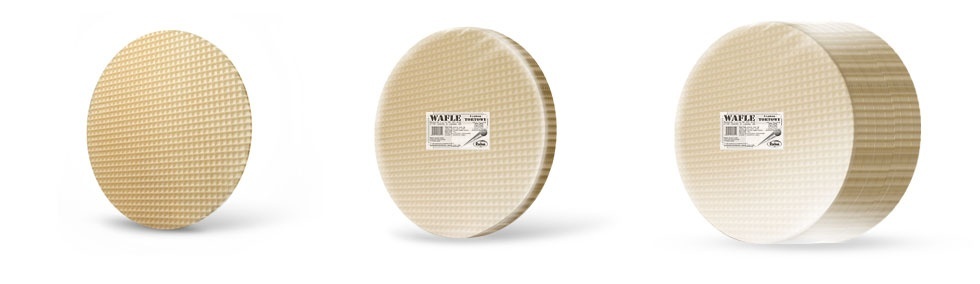
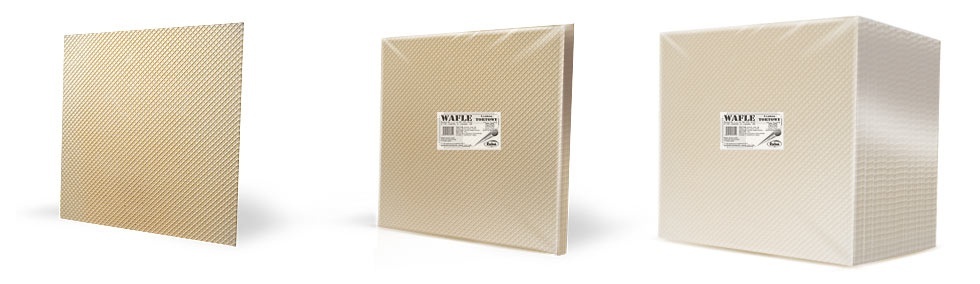
First of all, you need big wafer sheets (outside Poland, available in Polish or Russian groceries) -> like these or these. There are even heart-shaped waffles :) Don't you believe me? Go and see what a Polish blogger made with her waffles in a free time :)

Secondly, you have to choose the filling. There are plenty of differrent fillings, for example:
- toffee filling (or more extravagant: toffee with cookies)
- fruity filling
- helva filling
- peanut cream filling*
- eggnog cream filling
- honey cream filling
- lekvar-choco filling
- cacao cream filling
- vanilla cream filling
The most popular fillings in Poland are toffee filling (cook a can of condensed milk for 3 hours in a pot with water, open the can, beat the toffee that you just obtained with some soft butter) or powdered milk-based cacao cream. I promise to show you in the future more differrent filling recipes.
*this filling is delicious but you need to double or triple this recipe to be able to fill 1 pack of wafer sheets

Third thing is decoration. You can just leave undecorated filled wafers and cut them into diamonds, or spread with chocolate glaze and sprinkle with chopped nuts (other ideas are more than welcome). Torcik waflowy is often made for Easter and decorated just like mazurek, a famous Polish Easter cake. Just decorate waffle cake like mazurek or cut it into a shape of egg and decorate - like here or here.

Ok. If you already have made your plans, let's start!

1. Prepare enough cream (better more than less). At least 2 cups of cream for 1 pack of waffles.

2. Smear cream on waffles, when it is still warm! Don't skimp it, remember to cover the whole waffle with about 5mm of filling! Start from the inside.


Remember, begin with a wafer sheet and end with a wafer sheet - cream should stay inside! Cause...

3. ...cause when you are done with smearing waffles, now you have to wrap your cake into a baking paper or culinary aluminium paper. Leave it in a cool place and load it by putting a heavy big enciclopedia on the top of the wrapped cake! If not, soft (by a warm cream) waffle sheets will probaly deform. By loading our cake, it stays well-shaped and the filling glues wafer sheets (but remember, just like I said before, each sheet needs a lot of filling!) the best would be to leave the cake overnight but if not, than at least 2 hours. After that time, sheets will stay soft and the filling won't run down by cutting the cake!

4. Only now you can cut your cake into diamonds (or any other portions) and put on a plate or... decorate it and serve without cutting.

Now the fifth filling option (after toffe, fruity, helva and peanut filling), the one my mum got from my aunt Basia, who makes the best cakes of the world: sweet and delicious milky vanilla filling

1 cup milk
1 cup sugar
250 gr margarine (important: no butter!)
3 cups powdered milk*
few drops vanilla flavouring
(optionally: 1/2 teaspoon cocoa. If you add 3-4 tablespoons pure cocoa powder, you'll obtain vanilla-cocoa cream)
*If your cream is thick enough, you can add a bit less powdered milk. Or, take 2 cups powdered milk and 1 cup ground walnuts/almods/coconut flakes!

1. In a saucepan, bring to boil milk, margarine and sugar. Pour into a bowl and gradually add small amounts of powdered milk (nuts, cocoa) and flavouring and stir well all the time (make no clumps!). Smear waffles... well... and follow the tutorial instructions above (from point 2) :)

2. Optionally, melt 100 gr milk chocolate with 25 gr copha (coconut fat), decorate the cake, sprinkle with chopped nuts, decorate with nut halves, candies, coconut flakes or anything you like! It's really delicious!


Monday, 23 March 2009

US-American buckwheat cookies

Polish: ciasteczko
Kawésqar: kilíta
Mapunzugun: kochüke kofke
Quechua: qhapukillu
Guarani: mbujapemi
Aymara: misk'i t'ant'alla
Cheyenne: vé'keekóhkonôheo'o
Maliseet: sukolopanis
Naskapi: kwaaihkunaas
Ojibwe: pakwezhigaans

For language fans, cookie in Polish and some native American languages :) For cookie fans, a great cookies recipe, but a special one, with buckwheat flour. I love buckwheat so I couldn't resist, when I saw Alice Medrich's buckwheat recipe from her "Pure Dessert" book. This recipe was circulating in the web between American culinary bloggers. I changed it a little but and I promise, buckwheat flour gives those American cookies a tasty, surprising, nutty twist!

1 1/4 cups flour
3/4 cup buckwheat flour
225 gr soft butter
2/3 cup sugar
1 tablespoon cocoa powder + 1/3 cup chopped peanuts (unsalted)
(originally: 1/3 cup cocoa nibs)
a pinch of salt
few drops vanilla extract

1. Sift both flours with cocoa powder. Beat soft butter with sugar and salt until creamy and fluffy. Mix all the ingredients together and work the dough the way it stays homogeneous.

2. Wrap the dough into a plactic bag and roll it as thin as you want it to have. Or, form a long roll - you will cut slices of it like salami :) After 2-3 hours (or after night) cut cookes using a cookie cutter or knife. Bake 15 minutes in 180C oven.


Sunday, 22 March 2009

Israeli date pastries

Polish: daktyl
Portuguese: tâmara
Xhosa: umhla
Sicilian: rattula
Romanian: curmală
Azeri: xurma
Arabic: تَمْر
Kurdish: salroj
Malay: buah kurma
Mokshan: fig

Mammouls are delicious stuffed pastries, eaten in the whole Near East. They can be filled with dates, walnuts, pistachios, dates with sesame seeds and so on. they are a festivity cookie, eaten (depends on religion of the eater and on the filling) during Easter, Ramadan, Hanukkah and Purim. I ate once great Lebanese mammouls with pistachio filling in the most important moment of my life and that is why I will never forget its taste. Again, using great Elizabeth Wolf-Cohen's book "Jüdische Küche", I prepared Israeli mammouls (מעמול) with date filling and they were incredibly tasty and similar to the Lebanese ones I ate. However, Jewish and Arab recipes differ and I will show you Arab recipe another day, too.

(to make 12 pastries)
175 gr flour
2 tablespoons sugar
2 tablespoons milk
1+1 tablespoon orange blossom essence
90 gr soft butter
100 gr pitted dried dates
icing sugar to sprinkle

1. Combine flour with sugar. Add milk, orange water and butter and knead. Optionally, add few more milk but don't add too much cause the dough can't be sticky! Form walnut-size balls (I made 12).

2. Prepare the filling: chop dates finely and add orange blossom water (or optionally a bit of water to make the consistency better, but I just soaked dried dates in water before chopping them and it made everything easier, I simply strained them and chopped)

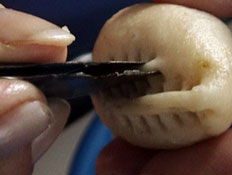
3. With your fingers, make a hole in dough balls and stuff each ball with a teaspoon of the filling. Close the balls and form them anyhow you wish. Mammouls can be formed with special wooden molds like these or you can shape them in your hands with a help of tongs (see also here , here and here). To inspire yourself, take a look at these pics: 1, 2, 3, 4, 5, 6.
And here are my no-mould-no-tongs-hand-made mammouls :)


ps. my mum asked me to make mammouls with our homemade chokeberry jam as a filling. I guess I'd like to experiment, I am sure it would taste great!

Monday, 9 March 2009

French (+ Jewish) pear tarte

Polish: gruszka
Cree: ᑳᔒᐅᐯᒋᓯᑦ
Blackfoot: ómahkínaotohton
Cheyenne: éškôsa'ehe
Quechua: pira
Mohawk: katshe'kahik
Guarani: yvavo’ĩ
Papago: pihlas
Maliseet: sikusq

Happy Women's Day! I know it was yesterday but better later than never! I wish all the best to all the women of the world, and especially to food lovers and guests on my blog! i baked something for you - a great French pear-almond tart (tarte aux poires et amandes), I usually try to use season fruits and vegetables but I just wanted so much to eat this tarte yesterday that I had to prepare it :) I took this recipe from a great book written by Elizabeth Wolf-Cohen titled "Jüdische Küche".

175 gr flour
1/2 teaspoon salt
4 tablespoons icing sugar
120 gr butter (or, as suggested in the book, parve margarine)
2 egg yolks (+ 1 tablespoom cold water)
2 eggs
50 gr sugar
90 gr ground almonds + 2 tablespoon sliced almonds
few drops almond aroma
2 big pears (about 500 gr)

1. Prepare the pie crust pastry: knead flour, icing sugar, salt, butter / margarine and 2 yolks whisked with 1 tablespoon cold water. Cover with paper and set in the fridge for 2-3 hours (or better overnight)

2. Butter a tarte-form and sprinkle with flour, roll the dough and fill the form. Put a sheet of baking paper on it and spread some beans to bake blind . Bake 10-15 minutes in 200C

3. Peel pears and cut into thin slices and arrange them on the baked shell. Separate yolks and whites from 2 left eggs. Beat yolks with sugar until almost white and fluffy, add ground almonds and aroma. Whisk whites until stiff. Add to yolk cream and pour over pears. Sprinkle with almond flakes. Bake about 30 minutes in 180C. I recommend to cover the tarte with baking paper to prevent excessive toasting of the top of the tarte. It smells delicious and tastes really really great! We ate it just as it was, au naturel :P but I guess a great idea would be serving it with vanilla sauce, whipped cream or ice-cream!


Monday, 23 February 2009

Swiss mirabelle tarte

Polish: mirabelka
Spanish: ciruela amarilla
Persian: آلو قطره‌طلا
Portuguese: mirabela
Austrian German: Kriecherl
Romanian: corcoduş
Swedish: mirabelle
Russian: мирабель

Mirabelle is the oldest kind of plums. My father makes a delicious mirabelle syrup which we drink later during cold winter dark evenings, and my mum prepares wonderful mirabelle jam, sweet and sour.


It is not a season to buy mirabelles now, you will have to wait until next late summer, but if you like these yellow small plums, don't forget to try Swiss mirabelle tarte, Mirabellenwähe!

150 gr flour
50 gr ground almonds (almond flour) + 3 tablespoons (separately)
1 teaspoon sugar
1/2 teaspoon salt
80 gr butter
1 kg mirabellen (weight with seeds)
50 ml milk
150 gr cream cheese
2 eggs
3 tablespoons sugar + 3 tablespoons vanilla sugar
icing sugar to sprinkle

1. Sieve flour, add ground almonds, sugar, salt and cold butter. Knead fast while adding 5 tablespoons water. Leave in the fridge for 1/2 hour (or more, can be left overnight) and after that, fill the tarte mold with the dough.

2. Throw the seeds from mirabelles away. Spread 3 tablespoons of ground almonds over the dough (which is already in the mold) and put mirabelles on it.

3. Mix milk, cream cheese, eggs and both kinds of sugar together. pour over mirabelles. Bake about 50 minutes in 180 C oven (or until the top is golden)


Tuesday, 16 September 2008

Brasilian cornmeal-yoghurt-lemon cake

Polish: mąka kukurydziana
Portuguese: fubá
Swedish: majsmjöl
French: farine de maïs
Spanish: harina de maíz
Russian: кукурузный мука
German: Maismehl
Dutch: maismeel
Japanese: コーンミール
Danish: majsmel

Since corn is one of the most commonly eaten vegetables in South America, cornmeal is also widely eaten. There is a plenty of cornmeal recipes especially in Brasilian cuisine: cakes, fried sweets, buns, cookies, puddings. I like this one: bolo de fubá com iogurte e limão, cornmeal-yoghurt-lemon cake.

1 1/2 cup cornmeal
1 cup wheat flour
1 tablespoon baking powder
1 1/2 cup sugar
1 cup lemon yoghurt
1 cup oil
2 eggs
1 tablespoon lemon zest
1 pack vanilla sugar
a pinch of salt
1/3 cup goiabada or candied lemon zest chunks

1. Beat eggs with yoghurt and oil. Add 1 tablespoon lemon zests, salt, sugar and vanilla sugar and beat until sugar dissolves.

2. Sieve both flours with baking powder. Add slowly to egg-yoghurt mass and whisk all the time. When everything is smooth, add goiabada cut ínto chunks (or candied lemon chunks) but spnkle them with a little bit of flour (this way they will not fall down during baking).

3. Prepare a tray by smearing with butter and sprinkling with thin dry coconut flakes. Pour the dough and bake 45 minutes in 180C. Before serving, sprinkle with icing sugar


Tuesday, 2 September 2008

Polish layered cake (wafer or cookies) + peanut & cocoa filling

Polish: wafle
Spanish: oblea
Turkish: kağıt
Japanese: ウエハース
Italian: cialda
Russian: Вафля
Croatian: vafel-list
Hebrew: ופלה
Portuguese: obreia
German: Oblaten

If you like layered wafer cakes and would like to make some on your own but you have no possibility to buy wafer sheets (my advice: Polish or Russian groceries!), you can use butter cookies instead of wafer sheets and fill them with the same filling as you would do when using wafers. This kind of cookie layered cake will ressemble German layered cookies-chocolate cake, called Kalter Hund (cold dog) which I am going to post soon.

see also: Polish filled wafer cake (with 3 filling options)
see also: Polish custard crackers cake

500 gr butter biscuits (petit beurre / Leibniz type)
1 cup sugar
2 tablespoons flour
2 tablespoons cocoa powder (the pure one, without sugar or powdered milk)
250 gr margarine (no butter!)
2 eggs
1 pack vanilla sugar + a pinch of salt
5 tablespoons milk
10 butter biscuits, ground
1/2 cup peanuts, crushed

1. Melt margarine in a saucepan. Add flour, whisk and bring to boil. Add sugar, cocoa and milk.

2. Whisk eggs with vanilla sugar and salt. Add to the saucepan together with ground biscuits and crushed peanuts (peanuts, if salted, should be covered with boiling water first to melt saltiness) and reheat, stirring all the time.

3. Prepare a tray and cover it well with kitchen aluminium paper or baking paper just like you did with Polish custard cake on crackers. Spread some filling (not more than 5 mm) and cover with next layer of biscuits. Repeat until filling is over. The last layer should be cookies. Cover with aluminium sheet, set in the fridge and put something heavy on the top of the tray. Leave overnight.


Of course, this filling is great to be used with typical waffers. the amount of cookies depends on teh thickness of your filling layers and of the size of your tray.

Egyptian fried pastries

Polish: Ramadan
Albanian: Ramazani
Lithuanian: Ramadanas
Greek: Ραμαζάνι
Kazakh: Рамазан
Arabic: رمضان
Persian: ماه رمضان
Portuguese: Ramadão
Wolof: Koor
Telugu: రంజాన్

The Muslim Holy Month begins. Every laic knows it is about fasting. Of course fasting is only one of the exterior manifestations and Ramadan means much more than fasting only. And, fasting doesn't mean abnegation of all delicacies, quite to the contrary, after the sunset, delicious sweets are, well, maybe not obligatory but more than welcome. One of them is called dates from Siria, balah el Sham, Egyptian sweet fried cakes.

dough
1/2 cup oil (you can give less!)
1 cup water
1 1/2 cup flour*
4 eggs
vanilla sugar (1 pack)
a pinch of salt

sirup
1 cup sugar
172 cup water
lemon juice (about 1 tablespoon or to taste)
+ coconut flakes (1/2 - 1 cup)

1. Pour oil and water in a saucepan, add salt and bring to boil. Sift flour and stir until you obtain a plain dough which doesn't stick to the pan. Set aside to cool a bit.

2. Prepare syrup by cooking the ingredients (sugar, water and lemon juice) together. When thick, set aside to cool.

3. Whisk eggs with vanilla sugar. When oil dough is template, you can start adding egg mass little by litte while stirring constantly. Check the consistency; the dough has to be quite thick. If needed, *add some more flour.

4. Place the dough into a pastry bag with a star shape tip. Press the dough into frying oil and fry until golden brown but on a low heat. Otherwise your dates will be crispy outside and raw inside! When ready, put them on a paper kitchen towel to avoid excessive oil contain. When still warm, deep them into the syrup for some minutes. You can deep warm dates in cold sirup or cold dates in warm sirup. Then roll in coconut flakes.

My balah el sham are a bit long, almost like Spanish churros. They are traditionally about 3 cm long.

Pictures will be available very soon. I just have to find them on my pendrive :)

Edit: I have the pics now. The quality is not the best but the pics are just to give you the idea about this dish :)


Wednesday, 27 August 2008

Polish custard cake without baking

Polish: krem
Hungarian: tejszín
Japanese: カスタードクリーム
Dutch: banketbakkersroom
Swedish: grädde
Hebrew: קרם
Italian: crema pasticcera
French: crème pâtissière
Basque: pastel-krema
Persian: سس کاسترد

Between two layers of salty crackers you find a sweet... custard! Custard creamy filling is the main ingredient of this Polish cake, kremówki. There are several variants of this simple delicious cake, the classical is custard cream between two filo sheets, cut into squares and sprinkled with icing sugar: it was the most beloved dessert of John Paul II :) My version requires no baking so it is practical and useful for those who at the moment have no oven but would like to pinch a bit of something sweet. Don't be afraid, salty crackers that you should use would not disturb nor distruct the taste! Using salty crackers is a must here, don't take sweet butter cookies (petit beurre or Leibniz or similar) cause you will be dissappointed; they melt and the whole cake losts its consistency. If you are afraid of saltiness, just bake 2 filo sheets :)

see also: Polish filled wafer cake (with 3 filling options)
see also: Polish wafer or cookies cake (with 1 more filling option)

about 150 gr salty crackers
250 gr margarine (don't replace with butter cause you will obtain vanilla sauce instead of custard!)
2 packs vanilla sugar
1 cup flour
3/4 cup sugar
4 egg yolks
1 l milk
icing sugar

1. Pour 3 cups of milk into a pan, add margarine and vanilla sugar and heat until boils.

2. Beat yolks with sugar until white and creamy, add flour and the rest of the milk and mix until homogeneous.


3. Pour slowly yolk-flour mixture to the pot with milk and margarine and stir constantly. Reheat and whisk until homogeneous in consistency. Filling is ready.

4. Cover a tray with baking paper or aluminium paper. Put the first layer of crackers. Spread the whole cream on them and cover with the second layer of crackers. Set aside in the fridge overnight, the tastes have to compose together through night. Before serving, cut into squares and sprinke with icing sugar.


Sunday, 30 March 2008

Polish sand cake

Polish: piasek
Chechen: гхум
Samoan: oneone
Romansch: sablun
Xhosa: isidibi
Old Prussian: smėltės
Mongolian: элс
Thai: ทราย
Inupiaq: maġġaq
Aymara: ch'alla

... Sand? Why did someone call this cake a sand cake? No, there are no unpleasant lumps that crack and rustle between your teeth... Quite to the contrary, Polish babka piaskowa, sand cake, has a lovely soft consistency, because of the addition of potato starch. Polish babka piaskowa is a sister of German Sandkuchen (even the names eman just the same) but as I observed, in German recipes you should take same amount of wheat flour and starch. Instead of potato starch you could use cornstarch* (I am almost sure cause I saw cornstarch in several Sandkuchen recipes) and maybe even tapioca* (I am experimenting with tapioka lately, its consistency reminds me of potato starch)

4 eggs
200 gr powdered sugar
150 gr wheat flour
100 gr potato starch*
200 gr soft butter
1 teaspoon baking powder
3 tablespoons milk
arak aroma / 1 tablespoon arak / vanilla / zest + juice from 1 lemon

1. Mix well soft butter with sugar. When homogeneous, add yolks one by one

2. Mix wheat flour with potato starch and baking powder, sift half of it to the eggs, add milk, mix and sift the rest of the flour

3. Beat whites. When stiff, combine with what you obtained in point 2. Also now add flavour (vanilla, arak, aroma or lemon)

4. Bake about 1 hour (depending, as always, on your oven) in 180C. Sprinkle with powdered sugar.


Tuesday, 25 March 2008

Swiss carrot cake

Polish: ciasto marchewkowe
Indonesian: kue wortel
Turkish: havuçlu kek
Latvian: burkānu kūka
Welsh: cacen foron
German: Karottenkuchen
Afrikaans: wortelkoek
Hebrew: עוגת גזר
Basque: azenario tarta
Portuguese: bolo de cenoura

Carrot cakes are commonly eaten and appreciated in Europe since medieval period. The thing is that beet sugar was very expensive in the middle ages, cane sugar was still unknown while honey was not so commonly available, so sweetening with sugar beets and carrots was carried on. Generally, carrot cakes can be divided into two groups: gingerbread-like and spicy or soft, with just a bit of shredded carrots or carrot puree to give light taste and colour, topped with philadelphia cheese icing. Third group is not that common and contains no-flour, but almonds. Like this Swiss Rüeblitorte. The idea of making this delicious cake came on my mind in German grocery store, where I saw packed powder to make this cake. I asked my friend google how to make this cake from fresh products and compared all the Swiss recipes I found. The result is this natty recapitulation of all of them, excluding one ingredient: Kirschwasser (I never drink alcohol but you can add it, but I think it could kill the lovely subtile taste of almonds)

300 gr almonds or almonds + hazelnuts
300 gr carrots
250 gr sugar + 1 pack vanilla sugar
4 eggs
1 teaspoon cinnamon powder
juice and zest from 1/2 lemon
50 gr flour + 1 teaspoon baking powder
a pinch of salt
(in the original Swiss version you would also need marzipan carrots and some apricot jam as a topping)*

1. Peel almonds (you can do it easily if you pour boiling water on them first) and grind (I did it in meat grinder to obtain crunchy texture instead of homogeneous mass). Grind raw peeled carrots too (or shred very finely)

2. Beat yolks with sugar, add almonds, carrots, lemon zest and juice, salt, and flour sifted with backing powder and cinnamon.

3. Beat whites and when stiff, mix lightly with carrot mass (it will not be easy but try to be as delicate as you can)

4. Bake 45 min - 1 hour in 180C oven. Sprinkle with powdered sugar, almond or coconut flakes or* smear with apricot jam and decorate with marzipan

For me, it was one of the best cakes I ever ate. My brother shared this opinion but my mum didn't like this taste :(


Polish cheesecake (sernik)

Polish: sernik
Russian: Чизкейк
Portuguese: bolo de queijo
Finnish: juustokakku
Norwegian: ostekake
Japanese: チーズケーキ
Slovenian: skutino pecivo
Turkish: labne peynirli pasta
Hungarian: sajttorta
Czech: tvarohový koláč

Cheesecake has to be a special guest on each Polish Easter table, same as during the Christmas time, but same time it has a very privileged place in the ordinary, non-festive period. It means that it is one of the most beloved cakes in Poland and so it is, together with apple pie. Cheesecake can be baked or cooled, light as a mousse or heavy and thick, with a differrent consistency that depends on adding gelatine, sour cream, milk or cooked egg yolks, flavoured with cocoa, peaches, jello, orange succade, lemon juice or sour cherries, underside with biscuit crumbs, layer of cake or anything... The big differrence in cheesecakes worldwide is the cheese that we use. In Poland it would be twaróg, a kind of quark or curd, which can be sold already mashed into a silky cream, or you mash it on your own. Nevertheless, people sometimes follow American standards and add philadelphia cheese. There also are cheesecakes with thick balcan yoghurt instead of cheese. I made mine with twaróg. Between thousands of cheesecake recipes, I am sure I will do this one again. I hope you will also like my Polish sernik!

1 kg quark / curd / twaróg
4 egg whites
4 egg yolks + two more*
2 tablespoons custard powder or potato starch
2 tablespoons wheat flour
9 tablespoons melted butter
9 tablespoons oil (mine was poppyseed oil)
1 1/2 cup powdered sugar
1/2 cup raisins
a handful of orange succade
1 cup boiling tea

(underside is of your choice: none, layer of yeast cake or pie crust, biscuit crumbs with melted butter or just a layer of biscuits or a big wafer)

1. Mash quark carefully. Pour boiling tea over raisins and set aside.

2. Beat 4 yolks with sugar. Prepare two yolks more: they have to be cooked.* You have two options: cook whole eggs, eat whites and take yolks, or separate whites and yolks from a raw egg, use whites anyhow you wish in other dessert and cook yolks (unbroken!) in a saucepan with boiling water with 2 tablespoons of vinegar.

3. Press cooked yolks through a sieve precisely, mix with beaten raw yolks. Mix butter and oil with well mashed (until silky!) quark

4. Combine eggs batter with quark. Add sieved custard powder and flour, succade and drained raisins

5. Beat 4 wgg whites until stiff and pour into quark, mix gently. Pour the mass into a tray (with wafer, biscuit crumbs, layer of cake or just butter with breadcrumbs) and bake - about 1 hour in 180C (as always, you have to be near the oven and check, check, check!)

(I covered mine with melted milk chocolate but you don't have to, you can leave it without topping or just sprinkle with powdered sugar)


Polish filled wafer cake + caramel-and-cookies filling, helva filling or fruity filling

Polish: wafle
Spanish: oblea
Turkish: kağıt helva
Japanese: ウエハース
Italian: cialda
Russian: Вафля
Croatian: vafel-list
Hebrew: ופלה
Portuguese: obreia
German: Oblaten

If you manage to find big dry wafer sheets, don't hesitate and buy them. In Poland they are very popular: wafer bars covered with milk or white chocolate, with differrent fillings: peanut, hazelnut, cocoa, coconut or even lemon, banana or apple; or big rounded layered cakes covered with chocolate, which you can buy in any grocery store. But same time you can buy sheets of wafers and make this kind of cake on your own; sometimes it is called pishinger. I will not give you now the most typical cocoa filling (maybe one day), cause I would like to suggest you to think about wafers from the other perspective. Here they are, homemade Polish wafers with 1: fruit filling, 2: biscuits-caramel filling and 3: halva filling!

(+ one advice before presenting you my recipes: when you are finished, cover your wafer cake with any baking or kitchen paper and put on the table and... cover with the heaviest book that you have, for, let's say, 30 minutes. This will help your wafer looking good, cause they are originally dry and when they feel the moisture of the filling, sometimes they re-shape and the edges deflect, which you have to avoid!)


Before starting, read wafer cake tutorial!!!!!


see also: Polish layered cake with wafers or cookies (with peanut-cocoa filling)
see also: Polish custard crackers cake


ingredients:
wafers (so many layers as you only wish)

filling 1:
120 gr butter / margarine
1/2 cup cream (12%, 18%, 36%... anything actually, but I took 12%)
1/2 cup sugar
1 pack fruit jello (depends on your pack but should be about 80 gr)
(optionally: 1 tablespoon powdered milk)

filling 2:
2 cans sweet condensed milk (one of them can be of cocoa flavour; if not, take 1 tablespoon powdered cocoa)
petit beurre / leibniz style biscuits (so many as many layers you would like to obtain, see below)

filling 3:
mashed sesame halva, 1 cup
butter, 1/2 cup
1 tablespoon peanut butter
1 tablespoon powdered milk (or more)

filling 1: put all the ingredients in a saucepan, heat and stir until melted. Set aside until cook and thicker. Take the first wafer, smear with jello cream, cover with the next wafer and so on, until the cream is finished. The last layer should be wafer, of course.


filling 2: cook cans with condensed milk for 3 hours in boiling water (be sure your cans are always under water; otherwise it can be dangerous!) or open them and prepare like manjar blanco, the choice is yours but the first option is much easier cause you don't need to stay in the kitchen for 3 hours and stir :) If you don't have cocoa condensed milk, whip one can of already cooked milk with cocoa. Some people beat cooked milk with butter, but you don't have to (I never do). Now smear the first wafer with caramel milk, which has to be covered with biscuits. Smear next wafer with cocoa milk and cover biscuits . Cocoa caramel has to touch biscuits, cause on the other side of wafer you will now smear milk caramel. Repeat until the last wafer and remember the layers: wafer - milk caramel - biscuits - cocoa caramel - wafer and so on (if my explication is not clear, please don't hesitate to ask me!)


filling 3: After mashing halva, mix it with soft butter, add peanut butter and powdered milk. Spread between wafer sheets. On my pic one layer is darker cause I added some cocoa too.
Observation: it is better to keep these wafers for 1 night in the fridge. I left them in the fridge and forgot abut them for 1 night and next day they were much better, cause halva filling need moretime to harden. What you see is a wafer just after cutting into misshapen diamonds. Next day the filling was solid and so easy to cut!)


I dedicate all those sweets to someone dear to my heart who is 33 today but unavailable to hear my cordial happy birthday... :(

Saturday, 1 March 2008

Indonesian cheese cookies

Polish: ser
Greenlandic: immussuaq
Uzbek: пишлоқ
Cornish: keus
Old Prussian: sūris
Amharic: አይብ
Faroese: ostur
Hausa: cúkű
Tajik: панир
Abkhazian: ашә
Chechen: нехча

Cheese... cookies...? Yes! I want to present you the most delicious cookies of the world. Ladies and Gentlemen, Cheese Indonesian cookies called sagu keju! I think that all the cookie lovers should make them at least once in a lifetime. I am sure you will love them. I once found sago pearls in my shop and carefully browsed the web in search of sago recipes. The most interesting one was sagu keju, but only in Indonesian :) Using all the dictionaries I could only find, I translated the ingredients, but couldn't go through the whole recipe. A dear blogger comrade from http://everything4sweets.blogspot.com/ translated for me her delicious recipe for these cookies. Thank you again for sharing that wonderful recipe, these cookies are unbelievably, unbelievably delicious!

125 g margarin
100 g butter
125 g powder sugar
3 egg yolks
100 g Edam cheese / old cheese*
50 g Cheddar cheese
300 g sago flour / arrowroots flour**
50 g maizena /cornstarch
50 g all purpose flour

1. Combine both shortenings with sugar until soft. Add egg yolks one by one and continue mixing

2. Mix sweet shortening with the cheese (*beware, it really has to be old! I made them once from fresh fat cheese and cookies melted in the oven... I did them thrice and I can say that you can take any kind of cheese -once I had olny fat Podlaski cheese- but frst grate it and leave uncovered overnight so that it becomes dry)

3. The last step is to add flours and to ocmbine well, until homogeneous. Use a piping bag with star nozzle and form lovely rings. Bake for 30 minutes in 180C, until dry but still not golden


and here are my sagu keju made without a piping bag


Wednesday, 30 January 2008

Belarussian helva cake

Polish: chałwa
Maltese: ħelwa
Greek: Χαλβάς
Arabic: حلاوة
Burmese: ဟလဝာ
Urdu: حلوا
Malay: അലുവ
Hindi: हल्वा
Armenian: հալվա
Bosnian: halva
Macedonian: алва

In Russia and former soviet republics (at least the western ones) you can try sunflower and peanuts helva. The sunflower helva is the taste of my childhood. Grandfather was always bringing it when visiting us and the taste was so specific that I loved it and hated it same time. Grandmother gave my mum a Belorussian cookbook. I sometimes browse the old cookbooks of my mum, looking for a new inspiration. Belarussian fake gingerbread (Пернічек) was a successful experiment. Beware, this cake needs no butter or oil, you just add helva! Tastes and looks like a real gingerbread but is mild and not spicy at all!

200 gr helva (I only had classical sesame helva, that is why I added the next and the last ingredient)
1/3 cup peanut butter
170 gr plum conserve (plum jam, plum butter, povidl, Pflaumenmus...)


1 cup sugar
3 cups flour
1 egg
1 spoon cinnamon
1 spoon baking soda
1 spoon vanilla sugar
1 handful peanuts

1. Disintegrate helva with your hands or with a fork

2. Blend helva with povidl, add baking soda and cinnamon

3. Whisk egg with sugar and vanilla sugar until sugar melts; add to helva and mix all the ingredients until creamy


4. Add flour and knead

5. Put in buttered tray, sprinkle with peanuts and bakeabout 45 minutes in 180C oven (make a test using a toothpic to be sure your Пернічек is ready)


6. Sprinkle with sugar water: combine 4 spoons sugar and 8 spoons water, cook and sprinkle the cake. After that, sprinkle with powdered sugar and cinnamon