Friday, 30 May 2008

Polish spring nettle soup

Polish: pokrzywa
Kazakh: қалақай
Upper Sorbian: wulka kopřiwa
Ossetian: Пысыра
Arabic: القراص
Quechua: ithapallu
Greek: Τσουκνίδα
Armenian: եղիճ
Icelandic: netla
Estonian: kõrvenõges

I am a big fan of nettle, so I really egg on all the people to eat it, especially now, in the spring time. The nutritious value of nettle is countless and if you know how to prepare it, it will taste really great, especially for spinach-fans. But remember to collect only the young nettles, those before blooming, caose only they contain tons of vitamins, minerals and flavonoids. Some tips? Prepare nettle leaves just like spinach and eat with curd cheese or use as a filling to pierogi (dough recipe here and here) or vegetable pie or quiche; add nettle leaves to salads and vegetable fritters; combine chopped leaves with fresh cottage cheese and garlic or add the leaves to scrambled eggs or omlette; finally, cook netle soup! One of the variants you can find below!

see also: Russian nettle borscht

1 l. broth
1 cup nettle leaves
1 big onion
1 egg
(optionally: 1/2 cup cream)*

1. Boil 1 cup water, add nettle leaves and leave for 1 minute. Throw the water away (this will take the excessive sipcy taste away) and put the nettle leaves into cooking broth and cook on a low heat for about 15 minutes.

2. Dice onion and fry with a bit of oil until soft and golden.

3. Blend nettle leaves and pieces of fried onion with a bit of broth. Mix with the rest of the broth.


Serve with cooked chopped egg (about 1/2 - 1/3 egg pro person). You can also add cream to cooking broth or blend the cream with nettles and onion, or put a bit of cream on each plate before serving the soup*; you can also sprinkle your soup with copped almonds, pine nuts or bread chunks (fried with oil and garlic and diced)


And here is another lovely nettle soup which I made at my grandmother's place (beautiful eastern Polish countryside)

Wednesday, 28 May 2008

Polish elder pancakes

Polish: bez czarny
Upper Sorbian: hołdračk
Bosnian: zovha
Arabic: بيلسان
Occitan: saüc
Albanian: shtogu
Galician: bieito
Lithuanian: juoduogis šeivamedis
Quechua: yana rayan
Cornish: skawenn

When you smell black elder's blossoms during an evening walk, you know it's late spring. In Poland the blossoms are fried in a batter and eaten with powdered sugar; in north Germany a soup from the berries is very popular; in Romania you can even buy a kind of Fanta with elderbery taste, and in Hungary elderberry brandy; in central Europe it is quite common to prepare a thick syrup from the blossom and lemon juice; you drink it dissolved with water or add to flavour your tea. Blossoms are dried and prepared as an infusion, too. This spring I dried some panicles which I am gonna drink in the wintertime, I also made a syrup and pancakes from the elder. Today I am gonna share the recipes for the elder pancakes, in Polish: placki z kwiatow bzu.

1 cup flour & 1 teaspoon baking powder
1/2 cup milk
1/2 cup sparkling, carbonated water
1 small pack vanilla sugar
1 egg white
1/2 - 1 cup elder blossoms
(eventually: 1 tablespoon lemon juice)

1. "Crumble" the panicles of elder to separate blossoms from the stalks. Some people deep the whole panicles into the batter but the taste of the stalks can destroy the whole pancake... I mean, in my opinion my way of making pancakes is much better than the fritters-methode... But it's up to you... My advice is to use blossoms only. It takes some more time but it is worth it! When you choose ripe paniles, blossoms will divide easily from the stalks!

2. Sift the flour with baking powder. Add water, milk and vanilla sugar. Combine. Beat the egg white and add gently to the batter. Add elder blossoms, they should be all covered with the batter. Now you can add lemon juice, too.

3. Fry! Just like regular pancakes. Serve sprinkled with powdered sugar, with homemade marmalade, honey, butter, maple syrup, dandelion syrup, manjar (How to do this Latin American spread? You can learn it from my recipe for Peruvian suspiro), nutella... So many possibilities!


Tuesday, 13 May 2008

Polish spring dandelion syrup

Polish: mniszek
Ossetian: Къаппа-къуппа
Upper Sorbian: mlóč
Old Prussian: pėinė
Ukrainian: Кульбаба лікарськ
Estonian: võilill
Faroese: Vanlig várhagasólja
Basque: txuntxumela
Aymara: qhanapaku
Luxembourgian: Bettseechesch
Persian: قاصدک


(pic taken from wikipedia)

May is the only month here in Central Europe to collect dandelions. There are so many reasons to collect them! To decorate your living-room sunny-yellowish or to several culinary purposes: false capers from dandelion buds, salad from leaves, kind-of-honey, lemonade and marmalade from flowers, kind-of-coffee even... yes, from roasted roots... and even alcoholic drinks (liqueur or something like this, I am thegreatest dabbler of the world about alcohol). Anyway, we are in the middle of spring here now so if any of you have a meadow or a lea full of dandelion somewhere around, don't hesitate and dedicate oe morning (this is very important: collected in the morning and in the sun, dandelions will contain pollen and nectar!) to collect dandelion blossoms! You will need three days to prepare the dandelion syrup, called in Poland sometimes miodek majowy (may honey) but it is worth it!

500 dandelion blossoms :D
1 lemon
1 orange
1 kg sugar

1st day
- Collect dandelion blossoms, as already said, before noon. If you find yellow stains on your fingers it means, there are pollens in your dandelions and that means the syrup will be tasty and healthy :P At home, let the flowers rest for one hour on a white paper, so that all the tiny insects could leave their homes. Don't wash!


- Leave dandelions in 1 liter water, together with orange and lemon slices. You can peel the fruits or cut with their skins (if bio) and cook for about 15 minutes. Leave.

2nd day
- Drain the flowers very, very, very wel, using a drainer and a spoon. Add sugar and cook 1-2 hours on a medium heat.

3rd day
- Cook again, for about half an hour or until you receive your beloved thickness.

- Stir into glasses, close them and then... eat on a toast together with frish cheese or butter or take a spoon to sweeten your tea!


I hope that the recipe is clear. If not, leave your question in the "comments" field and I will answer quickly. There are some more ways to use dandelions in the kitchen; even if at the moment I have no good camara, I will tell and show you how to prepare some more flower food soon!

Thursday, 3 April 2008

Polish apples in jackets

Polish: jabłko
Mohawk: sewahyowane
Blackfoot: ápasstaamiinaamm
Navaho: belasana
Anglonquin: waabimin
Ossetian: фæткъуы
Inuktitut: kimminaujaq
Polabian: jobkú
Votic: õuna
Livonian: umar

Apples are everywhere! In English in pineapple and aubergine (mad apple is one of its synonys), in French in potato (pomme de terre), in Old English in cucumber (eorþæppla)... but there is also apple mint... elephant apple... alligator apple... apple snail... apple of eye... apple of discord... apple butter... Adam's apple... Newton's apple... and... Ewa's baked apple :P Originally this Polish dessert is called apples in jackets or apples in dressing gowns (jabłka w koszulkach / jabłka w szlafrokach)

2 cups flour*
125 gr margarine
1 egg
1 egg yolk
1/2 cup powdered sugar
1 pack vanilla sugar or few drops vanilla aroma
3 tablespoons cream (should be thick)
salt ( pinch)
apples: about 8 (I can't tell you exactly; it depends on your apple's size)
1/2 cup marmalade, sour*
powdered sugar + cinnamon to sprinkle
+ flour to sprinkle the workplace

* the Polish name of the flour I used is krupczatka. I will not give you the number, cause the numeration differs depends on the country. Take the flour you would use to make shortcrust pastry: a grainy one (called semolina flour)

** homemade would be the best: I used homemade mirabelle jam, but gooseberry, sea-buckthorn and currant would be great too. If you don't have any of those, take bilberry or bramble or actually anything which is at least a little bit sour

1. Sieve flour, add cold margarine and hack with a knife. Usually it is not recommended to do it with hands because we don't want the margarine to melt with the warm of our hands, cause this dough has to be crunchy after baked. Add egg, yolk, 1/2 cup powdered sugar, vanilla sugar / aroma, cream, salt and knead fast with your hand (has to be done fast for the reason mentioned above). Let in the fridge until you are ready with apples, but the best would be to let it rest for at least 30 minutes

2. Peel apples, divide into halves and take the seeds off


3. Take small amounts of the dough from the fridge, roll them on the surface sprinkled with flour. Roll until thiner than 1/2 cm. Put a half of an apple in the middle, fill with marmalade and cover with the resting dough (see the picture, it serves better than my words :P)


4. Preheat your oven until 200-220C. Butter your tray and sprinkle it with semolina, breadcrumbs, coconut flakes or simply with flour. Bake about 15 minutes or until golden. When ready, sprinkle with sugar and / or cinnamon.


Wednesday, 2 April 2008

Belarussian curd rolls (pancakes)

Polish: twaróg
Albanian: gjizë
Russian: творог
Tatar: eremçek
Swedish: kvarg
Spanish: requesón
Romanian: urdă
Hungarian: túró
Latvain: biezpiens
Dutch: wrongel

Curd roll covered in chocolate is one of the Central and East European snacks. Probably it's because Central and East Europe is a true kingdom of milk and its products, from buttermilk and kefir through differrent kind of curd and fresh cheese until curd pancakes, breadrolls, crepes, buns, dumplings and thousands of differrent curd snacks, until innumerable variety of cheesecakes. My grandmum has access to fresh cowmilk and she makes her own curd, of course, and soured milk. Coming back to my Belarussian Recipes book, I tried Belarussian curd rolls, Батончики творожные. They are actually a kind of pancakes, we prepare very similar ones in Poland. Curd rolls available in grocery stores are not fried, and also remember that frying curd pancakes is a bit difficult cause it drinks oil and becomes golden brown very fast. But still, they taste really good!

500 gr curd / fresh cheese
1 cup flour
1 egg
2 tablespoons cream
1 tablespoon sugar
1/2 teaspoon baking soda
powdered sugar to sprinkle

1. Rub curd with cream and sugar. Whisk egg, mix flour with baking soda

2. Add egg to the curd, when homogeneous add flour and mix well

3. Roll the dough and cut into 10 cm slices. Fry and sprinkle iwth powdered sugar


Moldovan aubergine pancakes

Polish: bakłażan
Sranan: bulansyey
Malagasy: baranjely
Kashmiri: वाँगुन्
Tagalog: talóng
Bahasa Melayu: terung
Swahili: mbilingani
Papiamento: berehein
Tonga: paingani
Tajik: Боқлаҷон

Back to the discussion what should be called fruit and what should be called vegetable... How about aubergine? Actually, it should be denominated a fruit, cause from biological point of view it is a true berry, together with plantain, guava or grape. Let's see: there are several dishes from aubergine in the world cuisines that are sweet: Indonesian sweet aubergine stew semur terong, breaded eggplants dipped in honey (also Asian delicacy), Turkish eggplant marmalade (is it really sweet?) and Japanese eggplant... ice cream! (about the last one I am absolutely unsure of its sweetness, since Japanese produce and... consume... crab, eel, cheese or potato ice cream...). Aubergines are something new in Poland, my grandmum for instance never cooked them. I like them a lot, that is why regularily I browse the net in search of some new aubergine recipes, since there are no original Polish aubergine recipes. Lately I visited www.moldova.org and I found a nice collection of Moldovan recipes. First I tried eggplant pancakes, placinta cu vinete, something really, really tasty!

1 big eggplant
1 egg
3-4 tablespoons flour*
salt, pepper

1. Bake eggplant in the oven until its skin becomes dark. Peel, take the seeds off if they are big. Drain and chop.

2. Whisk the egg, add flour* (the recipe speaks about 1 tablespoon but I had to add more cause with only one I couldn't fry the pancakes), chopped eggplant, salt and pepper to taste.

3. Fry! What a great alternative for Polish potato pancakes! Serve with salads or pickles.

Tuesday, 1 April 2008

Polish carrot pancakes

Polish: tarka
Lithuanian: trintuvė
Luxembourgian: Rapp
Persian: رنده
Estonian: riiv
Russian: Тёрка
Hebrew: פומפייה
Finnish: raastin
Turkish: rende
Portuguese: ralador

...yes, kitchen grater :) The most important (and actually the only one) utensil to prepare Polish carrot pancakes, racuszki karotenki. Could be served as a warm sweet supper, dessert or breakfast, with cream, powdered sugar or cinnamon. After deliberating yesterday wether a carrot is a fruit or a vegetable, I decided to add one more sweet carrot recipe to my blog, also one of my favourites. I guess I really like carrots served in a sweet way. This recipe will be sent to Joelen to join her Tasty Tools Blogging Event. I have no special tips about kitchen grater... and my family already ate all the pancakes while only now I realised that I should make a pic with both pancakes and a grater :( But I hope I can still join, Joelen?

and the recipe:

1/2 kg carrots*
1 cup flour
1 teaspoon baking powder
2 eggs
a pinch of salt
cinnamon, icing sugar

1. Grate raw peeled carrots very fine (take the side of the garter with the smallest "eyes")

2. Whisk eggs with salt, sieve flour mixed with baking powder. It should be ready to fry but if you ffind it too loose, add a bit more flour. Fry, sprinkle with cinnamon and icing sugar

*you may add half grated apple too


Turkish sweet carrot balls

Polish: marchewka
Belorussian: морква
Armenian: գազար
Turkmen: кәшр
Maltese: zunnarija
Zulu: ikhalothi
Urdu: گاجر
Guarani: makychĩguasu
Estonian: porgand
Gujarati: ગાજર

Why is avocado considered a fruit and carrot or pumpkin - a vegetable? Right... Is carrot actually a fruit or a vegetable? The European Union didn't want to preoccupy baout this issue and an adequate decree declares that it is a fruit. So that Portuguese carrot jams can be classified as required. If in Portugal there is carrot jam; in Poland apple and carrot pie filling, carrot sweet fritters and carrot sweet dumplings; in Belarus sweet carrot and semolina puddings; in Spain, probably not very popular but still eaten carrot flan; and carrot cakes are eaten worldwide: then is carrot a fruit? We could divagate, multiplying arguments and reasons. In the meanwhile, prepare yourself another wonderful carrot dessert, Turkish carrot balls, havuçlu toplar.

see also: Turkish pumpkin balls
see also: Brasilian sweet potato balls
see also: Banana-aniseed balls

1 cup carrot puree (peel and cook carrots in water with salt and sugar, mash)

1 cup cookies, pepit beurre / leibniz type (mash them or grind in coffee grinder)

1 cup ground walnuts or a mix of walnuts and hazelnuts

a pinch of cinnamon

(about) 1/2 cup sugar, or to taste*

some biscuits, coconut flakes and / or cornflakes

When you have all the ingredients already prepared, just combine all of them and form lovely balls. I add 1/2 cup of powdered milk* to sweeten and make the mass thicker, but the original recipe require sugar* or sometimes a bit of butter / margarine (about 50 gr). Sprinkle with ground biscuits, coconut flakes or cornflakes (the last one is my invention). It is one of my favourite desserts.


Sunday, 30 March 2008

Polish sand cake

Polish: piasek
Chechen: гхум
Samoan: oneone
Romansch: sablun
Xhosa: isidibi
Old Prussian: smėltės
Mongolian: элс
Thai: ทราย
Inupiaq: maġġaq
Aymara: ch'alla

... Sand? Why did someone call this cake a sand cake? No, there are no unpleasant lumps that crack and rustle between your teeth... Quite to the contrary, Polish babka piaskowa, sand cake, has a lovely soft consistency, because of the addition of potato starch. Polish babka piaskowa is a sister of German Sandkuchen (even the names eman just the same) but as I observed, in German recipes you should take same amount of wheat flour and starch. Instead of potato starch you could use cornstarch* (I am almost sure cause I saw cornstarch in several Sandkuchen recipes) and maybe even tapioca* (I am experimenting with tapioka lately, its consistency reminds me of potato starch)

4 eggs
200 gr powdered sugar
150 gr wheat flour
100 gr potato starch*
200 gr soft butter
1 teaspoon baking powder
3 tablespoons milk
arak aroma / 1 tablespoon arak / vanilla / zest + juice from 1 lemon

1. Mix well soft butter with sugar. When homogeneous, add yolks one by one

2. Mix wheat flour with potato starch and baking powder, sift half of it to the eggs, add milk, mix and sift the rest of the flour

3. Beat whites. When stiff, combine with what you obtained in point 2. Also now add flavour (vanilla, arak, aroma or lemon)

4. Bake about 1 hour (depending, as always, on your oven) in 180C. Sprinkle with powdered sugar.


Saturday, 29 March 2008

Polish herring croquettes

Polish: śledź
Kashubian: stupka
Korean: 청어
Latvian: siļķes
Ukrainian: оселедець
Norwegian: sild
Georgian: ქაშაყი
Luxembourgian: hierk
Arabic: رنجة
Scottish Gaelic: sgadan

Herring has been a known staple food source since 3000 B.C. Here, in the Baltic sea region, herring is one of the most popular fishes. There are various methods of preparing it: raw, pickled, fried and even fermented... In Poland it is a must to eat herring during the lent before Easter and at the Christmas Eve Dinner, usually raw, cut into chunks with onion slices and oil. In my family we often eat this kind of herring salad for breakfast. Let me also propose a warm dinner dish: Polish herring croquettes, krokiety śledziowe.

see also: Portuguese codfish fritters

2 herring fillets, those without bones and heads, that were cured in salt (+ water + milk)
1/2 kg potatoes*
2 big onions
1 egg
1/2 cup breadcrumbs
pepper, dill
a bit of flour to sprinkle

1. Soak herrings overnight in water with a bit of milk to remove excessive salt

2. Cook potatoes (* if you want to obtain less herringy taste, take 1 kg of potatoes). Chop 1 onion and fry until golden brown

3. Using meat grinder, grind together soaked drained herings, cooked potatoes and the second onion

4. Combine the ground ingredients with breadcrumbs, chopped dill and lightly beaten egg. Add pepper to taste, you don't need to add salt cause herrings are already salty. Knead a bit.

5. Form croquettes, sprinkle with flour and fry. Serve with salads (tastes good with beetroot or raddish salad) and yoghurt with dill, parsley or chives


Thursday, 27 March 2008

pictures of some Polish Easter dishes

Easter is already gone...
Where I come from, the main ingredient of Easter is of course egg. Not mentioning pisanki and any other kind of painted or waxed eggs, the main dish of Sunday's Easter breakfast would be boiled eggs with mayonnaise and chives. So simple. Besides, there are plenty of ways to prepare eggs: in pockets of ground meat, chopped eggs stuffed in egg shells and fried and so on. People usually prepare homemade pate, baked ground meat with boiled egg inside or stuffed roast. Breakfast is 100% complete with traditional soured rye flour soup (żurek) with a bit of white sausage and boiled egg, and a tray full of differrent sausages and black pudding. The last but not least: before you eat, you share 1 egg, 1 sausage and 1 slice of bread plus salt and pepper with all the companion at the table; this symbolic amount that represents the whole Easter table has to be hallowed the day before.

Here is a small representation of Easter breakfast dishes:

eggs & obligatory bittercress


baked meat with quail eggs & eggs in meat pockets & toothpick-cubes & egg with mayo & hallowed piece of food to share (bread, sausage, egg with salt and pepper)


ground meat cake with quail eggs again


date & almond & chocolate cake, one of 1000 variations of so-called mazurek


pascha: curd cheese dessert with cocoa, raisins and succade, here with homemade bounty balls


babka: originally should be from yeast and minimum 20 eggs but I made a small one with lemon and orange and baking powder (shame, shame on me :P)


second variation about mazurek, typical Easter cake (this time with almonds and cooked yolks)

Tuesday, 25 March 2008

Egyptian vermicelli with sugar

Polish: krajanka / nitki
German: Fadennudeln
Portuguese: aletria
Turkish: tel şehriye
Spanish: fideos
Estonian: niitnuudlid
Bresciano: formentì
Greek: φιδές
Persian: ورمیشل
Czech: vlasové nudle

I am not a big fan of pasta; actually, I prepare them sparsely at home. Once a month or less. But Egyptian-style sugar vermicelli is something I really like, depsite of being pasta :) It was the first Egyptian dish I actually tried. Cheap, easy and sweet, is a good alternative if you wanna eat something sweet but your fridge is empty. I hope you will enjoy شعرية بالسكر, Egyptian vermicelli with sugar recipe, as well!

vermicelli (let's say, 1/2 pack / about 1 cup)
ghee, 1 tablespoon or more
water (about 1/2 liter)
sugar to taste, about 5 tablespoons

1. Fry vermicelli in ghee until golden brown, stirring all the time. Do not burn them!


2. In a saucepan, dissolve sugar in water. Add golden vermicelli (together with ghee in which it was fried). Cook on a medium heat until vermicelli are soft

3. You can serve it hot or cooled (my idea is to sprinkle the dish with cinnamon and serve with vanilla quark)


Swiss carrot cake

Polish: ciasto marchewkowe
Indonesian: kue wortel
Turkish: havuçlu kek
Latvian: burkānu kūka
Welsh: cacen foron
German: Karottenkuchen
Afrikaans: wortelkoek
Hebrew: עוגת גזר
Basque: azenario tarta
Portuguese: bolo de cenoura

Carrot cakes are commonly eaten and appreciated in Europe since medieval period. The thing is that beet sugar was very expensive in the middle ages, cane sugar was still unknown while honey was not so commonly available, so sweetening with sugar beets and carrots was carried on. Generally, carrot cakes can be divided into two groups: gingerbread-like and spicy or soft, with just a bit of shredded carrots or carrot puree to give light taste and colour, topped with philadelphia cheese icing. Third group is not that common and contains no-flour, but almonds. Like this Swiss Rüeblitorte. The idea of making this delicious cake came on my mind in German grocery store, where I saw packed powder to make this cake. I asked my friend google how to make this cake from fresh products and compared all the Swiss recipes I found. The result is this natty recapitulation of all of them, excluding one ingredient: Kirschwasser (I never drink alcohol but you can add it, but I think it could kill the lovely subtile taste of almonds)

300 gr almonds or almonds + hazelnuts
300 gr carrots
250 gr sugar + 1 pack vanilla sugar
4 eggs
1 teaspoon cinnamon powder
juice and zest from 1/2 lemon
50 gr flour + 1 teaspoon baking powder
a pinch of salt
(in the original Swiss version you would also need marzipan carrots and some apricot jam as a topping)*

1. Peel almonds (you can do it easily if you pour boiling water on them first) and grind (I did it in meat grinder to obtain crunchy texture instead of homogeneous mass). Grind raw peeled carrots too (or shred very finely)

2. Beat yolks with sugar, add almonds, carrots, lemon zest and juice, salt, and flour sifted with backing powder and cinnamon.

3. Beat whites and when stiff, mix lightly with carrot mass (it will not be easy but try to be as delicate as you can)

4. Bake 45 min - 1 hour in 180C oven. Sprinkle with powdered sugar, almond or coconut flakes or* smear with apricot jam and decorate with marzipan

For me, it was one of the best cakes I ever ate. My brother shared this opinion but my mum didn't like this taste :(


Polish cheesecake (sernik)

Polish: sernik
Russian: Чизкейк
Portuguese: bolo de queijo
Finnish: juustokakku
Norwegian: ostekake
Japanese: チーズケーキ
Slovenian: skutino pecivo
Turkish: labne peynirli pasta
Hungarian: sajttorta
Czech: tvarohový koláč

Cheesecake has to be a special guest on each Polish Easter table, same as during the Christmas time, but same time it has a very privileged place in the ordinary, non-festive period. It means that it is one of the most beloved cakes in Poland and so it is, together with apple pie. Cheesecake can be baked or cooled, light as a mousse or heavy and thick, with a differrent consistency that depends on adding gelatine, sour cream, milk or cooked egg yolks, flavoured with cocoa, peaches, jello, orange succade, lemon juice or sour cherries, underside with biscuit crumbs, layer of cake or anything... The big differrence in cheesecakes worldwide is the cheese that we use. In Poland it would be twaróg, a kind of quark or curd, which can be sold already mashed into a silky cream, or you mash it on your own. Nevertheless, people sometimes follow American standards and add philadelphia cheese. There also are cheesecakes with thick balcan yoghurt instead of cheese. I made mine with twaróg. Between thousands of cheesecake recipes, I am sure I will do this one again. I hope you will also like my Polish sernik!

1 kg quark / curd / twaróg
4 egg whites
4 egg yolks + two more*
2 tablespoons custard powder or potato starch
2 tablespoons wheat flour
9 tablespoons melted butter
9 tablespoons oil (mine was poppyseed oil)
1 1/2 cup powdered sugar
1/2 cup raisins
a handful of orange succade
1 cup boiling tea

(underside is of your choice: none, layer of yeast cake or pie crust, biscuit crumbs with melted butter or just a layer of biscuits or a big wafer)

1. Mash quark carefully. Pour boiling tea over raisins and set aside.

2. Beat 4 yolks with sugar. Prepare two yolks more: they have to be cooked.* You have two options: cook whole eggs, eat whites and take yolks, or separate whites and yolks from a raw egg, use whites anyhow you wish in other dessert and cook yolks (unbroken!) in a saucepan with boiling water with 2 tablespoons of vinegar.

3. Press cooked yolks through a sieve precisely, mix with beaten raw yolks. Mix butter and oil with well mashed (until silky!) quark

4. Combine eggs batter with quark. Add sieved custard powder and flour, succade and drained raisins

5. Beat 4 wgg whites until stiff and pour into quark, mix gently. Pour the mass into a tray (with wafer, biscuit crumbs, layer of cake or just butter with breadcrumbs) and bake - about 1 hour in 180C (as always, you have to be near the oven and check, check, check!)

(I covered mine with melted milk chocolate but you don't have to, you can leave it without topping or just sprinkle with powdered sugar)


Polish filled wafer cake + caramel-and-cookies filling, helva filling or fruity filling

Polish: wafle
Spanish: oblea
Turkish: kağıt helva
Japanese: ウエハース
Italian: cialda
Russian: Вафля
Croatian: vafel-list
Hebrew: ופלה
Portuguese: obreia
German: Oblaten

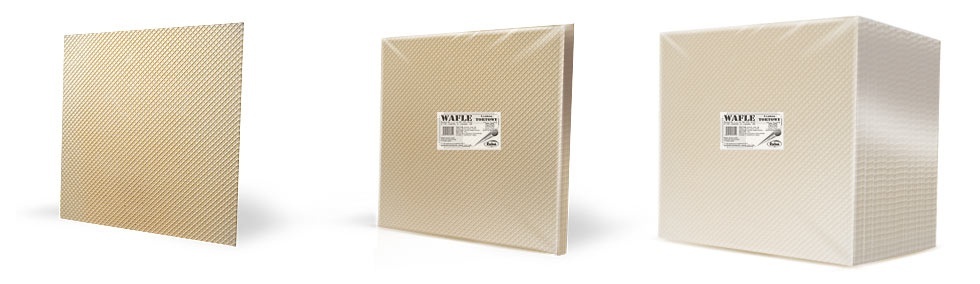
If you manage to find big dry wafer sheets, don't hesitate and buy them. In Poland they are very popular: wafer bars covered with milk or white chocolate, with differrent fillings: peanut, hazelnut, cocoa, coconut or even lemon, banana or apple; or big rounded layered cakes covered with chocolate, which you can buy in any grocery store. But same time you can buy sheets of wafers and make this kind of cake on your own; sometimes it is called pishinger. I will not give you now the most typical cocoa filling (maybe one day), cause I would like to suggest you to think about wafers from the other perspective. Here they are, homemade Polish wafers with 1: fruit filling, 2: biscuits-caramel filling and 3: halva filling!

(+ one advice before presenting you my recipes: when you are finished, cover your wafer cake with any baking or kitchen paper and put on the table and... cover with the heaviest book that you have, for, let's say, 30 minutes. This will help your wafer looking good, cause they are originally dry and when they feel the moisture of the filling, sometimes they re-shape and the edges deflect, which you have to avoid!)


Before starting, read wafer cake tutorial!!!!!


see also: Polish layered cake with wafers or cookies (with peanut-cocoa filling)
see also: Polish custard crackers cake


ingredients:
wafers (so many layers as you only wish)

filling 1:
120 gr butter / margarine
1/2 cup cream (12%, 18%, 36%... anything actually, but I took 12%)
1/2 cup sugar
1 pack fruit jello (depends on your pack but should be about 80 gr)
(optionally: 1 tablespoon powdered milk)

filling 2:
2 cans sweet condensed milk (one of them can be of cocoa flavour; if not, take 1 tablespoon powdered cocoa)
petit beurre / leibniz style biscuits (so many as many layers you would like to obtain, see below)

filling 3:
mashed sesame halva, 1 cup
butter, 1/2 cup
1 tablespoon peanut butter
1 tablespoon powdered milk (or more)

filling 1: put all the ingredients in a saucepan, heat and stir until melted. Set aside until cook and thicker. Take the first wafer, smear with jello cream, cover with the next wafer and so on, until the cream is finished. The last layer should be wafer, of course.


filling 2: cook cans with condensed milk for 3 hours in boiling water (be sure your cans are always under water; otherwise it can be dangerous!) or open them and prepare like manjar blanco, the choice is yours but the first option is much easier cause you don't need to stay in the kitchen for 3 hours and stir :) If you don't have cocoa condensed milk, whip one can of already cooked milk with cocoa. Some people beat cooked milk with butter, but you don't have to (I never do). Now smear the first wafer with caramel milk, which has to be covered with biscuits. Smear next wafer with cocoa milk and cover biscuits . Cocoa caramel has to touch biscuits, cause on the other side of wafer you will now smear milk caramel. Repeat until the last wafer and remember the layers: wafer - milk caramel - biscuits - cocoa caramel - wafer and so on (if my explication is not clear, please don't hesitate to ask me!)


filling 3: After mashing halva, mix it with soft butter, add peanut butter and powdered milk. Spread between wafer sheets. On my pic one layer is darker cause I added some cocoa too.
Observation: it is better to keep these wafers for 1 night in the fridge. I left them in the fridge and forgot abut them for 1 night and next day they were much better, cause halva filling need moretime to harden. What you see is a wafer just after cutting into misshapen diamonds. Next day the filling was solid and so easy to cut!)


I dedicate all those sweets to someone dear to my heart who is 33 today but unavailable to hear my cordial happy birthday... :(

Friday, 7 March 2008

Belarussian baked milk with plums

Polish: suszona śliwka
Welsh: prŵn
Breton: prunevenn
Spanish: ciruela pasa
German: Trockenpflaume
French: pruneau
Turkish: kuru erik
Russian: чернослив
Arabic: برقوق مجفف
Hungarian: aszalt szilva

Besides the digestive value, Moroccans add prunes to tagine, Jews to tzimmes, Norwegians to fruktsuppe, Poles to Christmas compote, Icelanders to the filling of Christams layered cake, Germans fill them with marzipan and fry in beer batter, and so on. There are so many ways of preparing prunes, in both sweet and savoury dishes. In Belarus (and probably Russia too, but I found чернослив в молоке recipe in an old Belarussian cookbook so it is Belarussian to me) prunes are baked in milk. This recipe is exceptional: very simple but astonishing and really tasty.

50 gr prunes (without stones)
2 cups milk
1 tablespoon sugar

1. Wash prunes, put in a bowl and pour boiling milk over them. Cover and set aside for 2 hours

2. Add sugar. You can cut prunes into smaller pieces as I did, or just leave them as they are

3. Pour the mixture into a pyrex tray and bake in the oven (200C) until the surface is golden and crunchy. I can't say exactly how long does it take cause it depends on your oven, but more than 1 hour for sure. When ready, cut into pieces and serve; it is not quiteeasy to cut thisdessert into lovely pieces but that doesn't matter. there will be a lot of sweet prune juice in the tray: pour it on each portion. You can experiment with quantity of prunes, milk and sugar and change a bit the taste and consistency, which reminds me all the milk-and-eggs desserts baked in the tray which is set inside another tray, full of water, like flan and leche asada.


Chilean quinoa croquettes

Polish: komosa ryżowa
Aymara: jiwra, supha
Mapunzugun: künwa, dawe, sawe, zawe
Quechua: kinwa , kiuna, kuchikinwa
Chibcha: suba, pasca
Lithuanian: bolivinė balanda
Russian: рисовая лебеда, киноа
Swedish: mjölmålla
Norwegian: perumelde
Greek: κινόα

Quinoa is a pseudocereal (just like buckwheat and amaranth) and was cultivated in South America even 5.000 years before. Together with potatoes, it was a staple food in Andean region before Incan Empire. Incas called them "mother of all grains"; until today in many countries quinoa has an alternative name: peruvian or incan rice (German: Inkareis / Perureis, Polish: ryż peruwiański, Spanish: trigo inca, arroz del Perú). Scientists say that without quinoa there would be no human being possible to live in the Altiplano. The mystery of its power is that quinoa contains a balanced set of essential amino acids for humans, making it an unusually complete food. Try these Chilean quinoa croquettes (croquetas de papa y quinoa), they are really worth it!

1 cup cooked, mashed potatoes
1 cup cooked quinoa*
1 egg
1/2 cup chopped onions
a handful of parsley
a pinch of cummin, salt and pepper

1*. You don't need any advice how to cook and mash potatoes, don't you? :) About quinoa: take about 1/2 cup dried grains, wash them well under running ater or soak for some hours (cause it contains bitter-tasting saponins) and cook with 1/2 cup water and 1/2 cup milk for about 5 minutes, after that time reduce heat and simmer for about 10 minutes until the grains are transparent. Don't add salt!

2. Whisk the egg, drain quinoa, chop parsley finely. Combine all the ingredients, now it is time to add salt too; form croquettes, and fry them (no need to sprinkle with flour before frying)


German tuna pasta

Polish: tuńczyk
Turkish: ton balığı
Catalan: tonyina
Latvian: tuncis
Rapanui: kahi
Lithuanian: paprastieji tunai
Arabic: تونة
Japanese: マグロ
Russian: тунец
Thai: ปลาทูน่า

People were fishing tunas even in the antiquity, while canned tuna was eaten since the beginning of XX century. Now, the canned version is eaten especially among students and diet-watchers. I learned this simple dish when I was studying in Germany. If yiu have not much time but wanna eat something tasty, prepare this: Thunfisch-Nudeln.

about 500 gr noodles (or less)
1 canned tuna (better without oil)
1 cup tomato puree (packed or made on your own from fresh tomatoes)
2 big onions, 2 garlic cloves
a handful parsley
salt, pepper
grated cheese

1. Cook noodles the way you always do, chop onions and parsley finely and grind garlic

2. Fry onions and garlic until golden, add tomato puree and stew some minutes, until tomato puree is thicker. Add drained tuna, stew a bit more. Season with salt, pepper and parsley to taste

3. Combine cooked noodles with tuna sauce and sprinkle with grated cheese before serving


Monday, 3 March 2008

Polish potato-walnut fritters

Polish: orzech włoski
Saami: niehtti
Estonian: kreeka pähkel
Romansch: nose
Swiss German: Baumnuss
Kurdish: gûz
Irish: gallchnó
Turkmen: грек хозы
Greek: καρύδι
Belarussian: арэх

In this post I would like to present you a very old Polish recipe how to prepare potatoes, including walnuts: kotleciki z orzechów (walnut-potato fritters). I found it once while browsing old Polish cookbooks from the time before the Second World War. Potatoes are usually prepared in Poland as various dumplings or latkes, pancakes or as a filling for pierogi (the filling can be raw grated potatoes or cooked, mashed with curd, garlic and herbs). Believe me or not but walnuts and potatoes go really well together.

1/2 kg cooked, peeled potatoes
100 gr ground walnuts
2 eggs
1/2 cup breadcrumbs*
a handful dill
salt, pepper
+ 1 egg, a pinch of salt, a handful flour and breadcrumbs and oil to fry

1. Mash potatoes and mix well with ground walnuts, add whisked eggs, finely chopped dill (or parsley, but dill tastes here much better) and breadcrumbs (* if 1/2 cup is not enough to form balls from the dough, add more)

2. Form nice balls and flatten between your hands

3. Prepare 3 plates: first with egg whisked with a pinch of salt, second with flour and third with breadcrumbs. Now do the following: cover each piece of the dough with flour, then deep in whished egg and after all, cover in breadcrumbs and fry.


This is my second contribution into Sia's Ode to Potato event. I hope it is allowed ;)