Thursday, 14 February 2008

Georgian stuffed flatbread

Polish: Gruzja
Georgian: საქართველო
Old Prussian: Grozėjė
Udmurt: Грузия
Abkhazian: Қырҭтәыла Аҳәынҭқарра
Aramaic: ܓܘܪܓܝܐ
Chuvash: Грузи
Ossetic: Гуырдзыстон
Kashubian: Grëzóńskô
Kurdish: Gurcistan
Nahuatl: Xeorxitlān

I would like to write so much about Georgia, its population, language, monuments, cuisine, fascinating history. This country absolutely fascinates me. Eastern Georgians were called Iberians by ancient Greeks, so Georgia has something to do with my studies :) I had not many chances to try original Georgian food, but once, in Nuremberg, I bought delicious suluguni cheese in a Russian shop, and other time, a friend gave me churchkhela, sweet grape and nuts sausage, to try. From the webpages I surfed through I learned that Georgians eat a lot of nuts, eggplants, plums and drink wine. Khachapuri (ხაჭაპური), which means cheese bread, is considered breakfast dish. I compared several recipes and made my own khachapuri. After eating it, I loved Georgia even more

1 cup milk
2 eggs
1/2 teaspoon baking powder
3 tablespoons oil
salt
400 g flour (about)
250 gr cheese (the original recipe requires Georgian suluguni cheese, which I didn't have, so I used feta + bryndza + mozzarella)
1 tablespoon sour cream

1. Whisk one egg with milk, oil and salt (I also added 1 teaspoon dried garlic, but I just love this taste)

2. Add flour and knead. I can not tell the exact measurement, but about 400 grams: so much until you have a rollable dough but still soft. Let stand for about 15 minutes, in the meanwhile prepare the filling

3. Whisk second egg with sour cream, add grated cheese


4. Divide dough and filling into portions. I made three: one fried in a pan, one baked and one boat-shaped, baked, from the rest of my dough.

5. Roll one portion of the dough into a circle. Cover the middle of the circle with cheese and leave the edges without cheese. If you want, cut the edges as I did - it may result easier to close them. Now gather the edges together and close them so that no cheese gets off. Form a nice plain bread.


6. Now you can fry the bread in the oil from both sides or bake in oven. Not bad would be frying them first and after that baking for some 10 minutes. I fried my first bread and the filling was still unstable and flow out, so I baked it 10 minutes more in the oven (filling should not be fluid!), and I baked the second one.


7. If you want to make a boat-shaped khachapuri called adjaruli khachapuri, take one portion of the dough, form a boat, make some place inside to put the filling: cover it with cheese and put one more egg on the cheese layer, but don't break the yolk. Put a bit of butter on the egg and bake.


Aronia milkshake

Polish: aronia
Upper Sorbian: slowčinowa aronija
Latvian: aronijas
German: Apfelbeeren
Danish: surbær
Swedish: aronior
Welsh: aeron tagu
Russian: арония
Ukrainian: горобина чорноплідна
Icelandic: logalauf

Chokeberry may cause a sensation of choking because of its bitter taste. That is why people freeze them before eating. Despite of this inconvenience (even after freezing they are not sweet), it is worth eating to make heart stronger. My grandmum has a whole field of chokeberries. She makes preserves. Chokeberry cake or muffins must be a good idea, too. I made chokeberry milkshake.

1 cup milk
1 cup strawberry ice cream
1/2 cup chokeberries
sugar to taste

1. Cook chokeberries in 1/2 cup water for about 10 minutes. Drain and blend with milk. Rub through a sieve and sweeten if you need to.

2. Blend with ice cream and... consume :)


Wednesday, 13 February 2008

Egyptian fried eggplant

Polish: bakłażan
Maldivian: ބަށި
Ilokano: tarong
Vietnamese: CPà tيm
Armenian: րադենջան
Slovenian: jajčevec
Romanian: vânătă
Malagasy: baranjely
Georgian: ბადრიჯანი
Corsican: malinzana

Did you ever wonder why is eggplant actually called... eggplant? Well, the ancient eggplants were not violet and long, but white and egg-shaped. You can find white eggy aubergines until today, but not here in the heart of Europe. In Poland, until XIX century, eggplants and tomatoes were considered nothing but decorative garden plants! My poor grand-grand-grand-grandparents, they never tried delicious fried aubergines! I spied on this recipe from an Egyptian so I consider it Egyptian, but I guess باذنجان مقلي can be served anywhere where eggplants popular are. Egyptians serve them with koshary and fried yellow peppers. Recipes for those dishes will appear soon, I promise!

aubergine (-s)
salt
cumin
lemon juice (vinegar)
garlic cloves

1. Cut eggplants in 0,5cm - 1cm slices. Sprinkle with salt and leave for 30 minutes

2. They are ready when drops of water appears on its surface


3. Fry eggplants (oil has to be really hot) from both sides until golden

4. Prepare the sauce: combine lemon juice (vinegar) with salt, kammun and chopped garlic cloves (proportions to taste)

5. Deep each slice in lemon juice sauce and leave on a plate.


Thursday, 7 February 2008

Quince preserves

Polish: pigwa
Arabic: سفرجل
Bosnian: dunja
Rapanui: tuava
Ukrainian: Айва́
Romani: गुदुईन
Sardinian: tidongia
Welsh: cwins
Flemish: kweepeer
Upper sorbian: prawy kwětlowc
Spanish: membrillo

Quince. A fuit with so much meaning. May have preceded apple culture. It was a ritual offering at ancient Greek weddings and an important ingredient in Roman cookbooks. In Portuguese quince is called marmelo and marmelada was just cooked quince ith sugar, which was the beloved sweet of Christoph Columbus. In Spain this dessert is called dulce de membrillo and it is eaten as an appetizer with salty cheese. In Poland and Germany preparing above mentioned "quince bread" is always related with preparing quince jelly. Both at once. I even made ice cream and sorbet. I am gonna show you how. But I had no big quinces so I used baby quinces.


quinces (1 pan full of quince chunks)
sugar
2:1 preserve sugar (with pectin)

1. Cut quinces into chunks, don't peel, don't throw the seeds. Put into a saucepan.

2. Add so much water just to cover fruits. Cook until they are soft (check with fork)

3. Drain fruits (don't throw the resting juice!) and rub through a sieve

4. Cook quince puree with sugar (give as much sugar as much quince puree you obtained). The longer you cook, the darker will be your quince bread.

5. Pour the mass into a plain tray. Some people dry it in opened oven, but I think it is better to let it cool in a tray without baking. When cooled, cut in pieces and eat with slices of salty (especially sheep and goat) cheese or sprinkle with sugar and just eat sweet


6. Cover the sieve with a linen towel. Drain the juice, it has to be clear. Now you can prepare sorbet, ice cream or jelly.

To make a jelly, cook the juice with 2:1 pectin sugar (two portions of juice with one portion of sugar). Scald your jars and close jelly inside.


To make a sorbet, sweeten the juice to taste and freeze


To make ice cream, take 1/2 cup quince bread, 1 cup yoghurt and 1 cup milk. Combine and freeze.


To make a quick refreshing drink, combine 1 tablespoon quince jelly with a cup of water.

Polish (Silesian) poppyseed pudding

Polish: mak
Sudovian: mākē
Valencian: rosella
Sardinian: pabauri
Sanskrit: खस्खसवृक्षं
Persian: خشخاش
Guarani: ka’amonge
Macedonian: Мак
Upper Sorbian: mak
Aragonese: ababol
Basque: mitxoleta

Christmas time is over. Carnival is over. Even Ash Wednesday is over. But I think about poppyseed desserts still and already miss them. Why do Poles love Christmas so much? Because we eat tons of poppyseed this period, which makes us feel good and very happy. People prepare poppy with whipped cream and pasta, poppy with cooked wheat grains and raisins, poppy mass with little crunchy fried cakes or makowiec, twist cake with poppy filling. My family loves poppy not only in December. We made another poppy dessert some days ago. after New Year. Here it is: Silesian makiełka

800 gr poppyseed
1/2 - 1 cup honey (depends how sweet you would like to have your dessert)
1 cup raisins, dried dates chopped, dried cranberries
1/2 cup chopped walnuts, almonds
1 challah or sweet yeast bun
1 cup whipped cream (or more)


1. Begin in the evening the day before eating. Pour poppyseed in a bowl and cover with 1 liter boiling water. Poppyseed have to be covered all. Cover the bowl with a plate, seeds should drink all or most of the water until the next day.

2. Grate drained poppy twice or better thrice in the grating machine.


3. Add honey and whipped cream to poppy cream, stir. Slice challah.

4. Prepare a big nice bowl. Put carefully some slices of challah on the bottom to cover it completely, this is the first layer. Cover challah with poppy cream, sprinkle with a handful of dried fruits and nuts. Continue until all the ingredients are over, the last layer should be dried fruits and nuts.

5. Let cool for about 5 hours (or the whole night) in the fridge, so that challah becomes soft. Some people use water instead of whipped cream, and their poppy mass is a bit loose and challah soaks with poppy layer perfectly, but with whipped cream it is much more tasty!


Finnish rutabaga cake

Polish: żyto
Old Prussian: rogē
Sudovian: rugīs
Quechua: sintinu
Latvian: rudzi
Luxemburgian: Kar
Galician: centeo
Serbian: раж
Slovenian: rž
English: rye
Georgian: ჭვავი

When my sister brought me 2 huge rutabagas, I surfed through all the possible recipes that I could only find in the net, in many languages, especially from Scandinavia. I like the taste of rutabaga, a mix of sweet, spicy and nutty. This great pumpkin-coloured vegetable tastes like turnip and smells like horseradish. I found a recipe how to make Finnish-Karelian Lanttukukko, rutabaga rye pie. Thanks to Varislintu from UniLang who translated the recipe for me! :)

750 ml water
40 ml (about 1 1/2 cup) rye flour
50 g fresh yeast
5 cups flour (wheat)
3-4 tbspoons salt
1 big rutabaga
1 teaspoon sugar
1 kg ground meat
a handful of parsley
1 big onion
2 teaspoons salt, a bit of pepper
butter to grease the pie

1. Mix yeast in warm water. Add rye flour until it is porridge consistency. Leave for an hour.

2. Slice rutabaga (I peel vegetables after cooking) and cook in salted and sugared water until soft (about 20 min).

3. Add flour (about 5 cups or until the dough doesn't stick to the bowl) and 3-4 tbspoons salt to the yeast dough and knead. Cover with towel and let rise in a warm place.

4. Chop onion finely, fry with meat, add 2 tspoons salt, pepper and chooped parsley.

5. When the dough is grown twice, sprinkle your workplace with rye flour and knead again. Pin it out. Now you can make the original rutabaga pie which has a pie shape, or follow my idea of rolling the dough like a twist-cake (strudel). Fill with rutabaga slices and meat, roll. Bake in 250C for about 1 hour (until golden). Grease the top with butter.


The original recipe wants you to wrap the pie in greaseproof aper, newspaper and plastic bag and rest 3 hours in room temperature until soften. I just ate it :)

I don't know if the final result should look like this. My Lanttukukko looks like stuffed bread :) And guess what? I made this dough again, to make delicious breakfast bread rolls :)


Polish baked brussel sprouts

Polish: brukselka
Serbian: прокељ
Japanese: メキャベツ
Kölsch: Shprütshe
Welsh: ysgewyllen
Irish: bachlóga Bhruiséile
Scots-Gaelic: buinneag Bhruisealach
Slovak: ruicková kapusta
Latvian: Briseles kaposti
Breton: kaol-bihan
Norwegian: rosenkål
Spanish: col de Bruselas

Brussels sprouts are supposed to be Britain's most hated vegetable, and in the USA children hate them. Funny, Polish kids dislike spinach :) But brussels are very healthy, full of nutritive minerals. To avoid the smell, add a bit (2 tablespoons) milk and 1 teaspoon sugar to the water in which you will cook your brussels, but before that, cut a cross in the stem of each vegetable. in Poland we eat brussels sprouts baked in bechamel sauce or stewed with sour cream. Polish-style brukselka pod beszamelem tastes really good!


1/2 kg brussels sprouts
1/2 cup broth
1/2 cup milk
3 tablespoons flour
3 tablespoons butter
salt, pepper, nutmeg
a handful of pumpkin seeds
2 tablespoons sheep or goat cheese, mashed
butter

1. Cook brussels sprouts (as recommended above) but not until 100% soft (try with fork - it will take less than 10 minutes)

2. Melt butter in a saucepan. Add milk and boil.

3. Combine flour with broth. Add to cooked milk. Take from the heat. Stir well and boil again. Add salt, pepper and nutmeg to taste

4. Take 1/2 cup of bechamel sauce and combine with cheese.

5. Grease Pyrex dish with butter. Put brussels, cover with bechamel sauce. On the top, leave bechamel mixed with cheese and sprinkle with pumpkin seeds. Bake in oven in 250C for baout 20 minutes / until golden


Wednesday, 6 February 2008

Syrian pepper spread

Polish: papryka
Korean: 고추류
Asturian: pimientu
Chechen: бурч
Flemish: paprika
Malay: lada
Maasai: olpilipili
Tagalog: sili
Mapunzugun: trapi
Guarani: ky’ỹi

When I made for the first time this ancient dish, originated in Aleppo, the culinary capital of Syria, I crazily fell in love with it. This wonderful Syrian dip, Muhammara (محمره), is just delicious. I usually eat it with dark bread with cereals for breakfast but it tastes so good that I could eat it all day long, in each occasion.

1 medium pepper (mine was a bell pepper of 200 gr)
1/2 cup ground walnuts
1/2 cup fresh breadcrumbs
1/2 cup (or even 1/3) olive oil
2 tablespoons tomato paste
1 tablespoon lemon juice
about 4 garlic gloves, mashed
1/2 teaspoon cumin
if needed, salt and pepper too (I didn't add)

1. Bake pepper in the oven until the peel is dark. Peel it and throw the seeds from inside.

2. Blend peeled pepper slices with the rest of the ingredients. Garnish with a handful of parsley green if you like (I do)


Turkish pumpkin pasta

Polish: makaron
Basque: makarroiak
Icelandic: núðlur
Gujarati: મૈકરોની
Mongolian: хөндий
Faroese: makaroni
Chinese: 通心粉
Maltese: mqarrun
Thai: มะกะโรนี
Slovak: makaróny

I promise, one day I will learn Turkish. Yes, I love all the languages and because of many reasons. The main reason for learning Turkish is the variety of its cuisine and a great number of delicious recipes, especially those vegetarian. I am not a big fan of noodles (I barely eat them) but I absolutely adore pumpkin, so without any doubt I had to try balkabağı pasta.

a packet of penne (rigatone) noodles (I had about 300 gr)
1 cup (better a bit more) raw pumpkin, diced
1/2 cup pumpkin seeds
1 cup broth
1 medium onion
1 tablespoon sour cream

1. Cook noodles as usual

2. Stew diced pumpkin with broth until soft

3. Grind half of your pumpkin seeds and add to the pumpkin broth. Fry the rest with finely chopped onions. Add onions to pumpkin.

4. Pour pumpkin sauce over pasta. Stir. Add sour cream, salt and pepper to taste

(grounded seeds was my invention. You don't have to do it. Just take less seeds and only fry them with onion)

Egyptian zucchini pudding

Polish: cukinia
Azeri: kədü
Suahili: boga dogo
Kurdish: kundir
Slovenian: bučka
Arabic: كوسه
Bulgarian: тиквичка
Valencian: carabassi
Sicilian: cucuzzedda
Afrikaans: murgpampoentjie
Malagasy: korizety
Hindi: तुरई

Courgette is a funny vegetable. Actually, you don't even realize that botanically this lovely green vegetable is just a swollen ovary of the female zucchini flower. Unlike pumpkin, we eat it immature, before it grows really long and gets a pumpkin-like, hard shell. Its delicate taste makes this vegetable so universal that you can prepare it mild, spicy or even sweet. Just like this Egyptian courgette pudding; مهلبيه بالكوسه : Believe me that it tastes delicious!

see also: Brasilian corn pudding

1 medium courgette
4 tablespoons sugar
1/3 cup water
1 1/2 cup milk
2 tablespoons potato flour (or ground rice)

1. Wash the courgette carefully; it will be eaten unpeeled (to give a bit crunchy texture). Cut it into very very thin slices.

2. Cook the vegetable slices with sugar and water until soft.

3. Combine 1/2 cup milk with starch. The rest of the milk should be added to courgette.

4. When milk with courgette boils, take it off from the heat, add the lasting milk with starch and stir. When homogeneous, cook again until you see bubbles. Decorate and serve!


Tuesday, 5 February 2008

Sea-buckthorn dessert

Polish: rokitnik
Upper Sorbian: rokotnik
Catalan: arç groc
Danish: havtorn
Hungarian: homoktövis
Romanian: cătina albă
Finnish: tyrni
Esperanto: ipofao
Lithuanian: Šaltalankis
Chinese: 沙棘
French: argousier
Russian: oблепи́ха


I lived for two years at the German Baltic coast. My student's dorm was next to the beach (well, half hour jogging) and it is when I first met sea-buckthorn. I needed to know about this new, funny plant. I read so much and I learned that dried sea-buckthorn served as a vitamin C capsule for Russian soldiers, cause this fruit contains so much vitamin C as no other fruit, even rosehip and blackcurrant. Mashed sea buckthorn can refresh the face skin and fruits together with the whole sprigs (cut) can be cooked with water and drunk as a homemade delicious homemade hairgrowth stimulation. When I was in that city again, some weeks ago, I had no other option but cut some sprigs and transport them home in my suitcase. I made sea-buckthorn jelly, sorbet, beverage and ice-cream. Here is my jelly :)


1 cup sea-buckthorn juice
1 cup water
sugar to taste (you must try it on your own, sea-buckthorn's taste is very specific, a bit bitter, a bit acid)
4 teaspoons gelatine (or agar-agar, but I don't know how much)
1/2 banana
1/3 cup strawberries

1. Press juice from sea-buckthorn berries using the methode that is the most comfortable for you (I rubbed them through a fine sieve and used the pomace to prepare my sunny yellow beverage)


2. Mix juice with water and sugar and cook. When warm (not necesarily boiled), add gelatine or agar-agar powder

3. Take 1/5 from the jelly and mix with strawberries. Other 1/5 should be mixed with half banana.

4. When harden, divide three jellies in your cups. Let it rest in the fridge until congealed, and consume!


Turkish pumpkin sweet balls

Polish: herbatnik
Chinese: 饼干
Occitan: bescuèch
Samoan: masi
Aymara: misk'i t'ant'alla
Czech: piškot
Maltese: gallettina
Persian: بيسکويت
Saami- keaksa
Scots Gaelic: briosgaid
Zulu: Ibhisikidi
Swiss German: Guetzli
Thai: ขนมปังกรอบ

Biscuits were the main ingredient of this dessert, even if the most laborious indredient was kaymak. Funny, in Poland we have kajmak too, but it means here a cooked condensed milk, similar to caramel, while in Turkey, Balcan and Arab countries it means a thick cream. According to Binnur's recipe, I prepared my "southern" kaymak. The result was a thick cream, which I can not compare to any other thing. Oh, maybe to the Milky Way chocolate bar :) Kaymak and pumpkin? Yes, kaymakli balkabaği :)

see also: Turkish carrot balls
see also: Brasilian sweet potato balls
see also: Banana-aniseed balls

2 cups 3,5% milk
2 cups 36% cream
500 gr pumpkin puree (cooked, mashed pumpkin)
1 cup round walnuts
1 cup ground biscuits
1/2 cup sugar (or even less)
coconut flakes

1. The first step must begin 2 days before serving. You have to prepare kaymak. Combine milk and cream and boil. Pour into pyrex dish. Cook water in a pan and put the pyrex dish on the pan to let the milk-cream cook thanks to the vapour from the pan.


Simmer for 8 hours, cool and keep in the fridge for 24 hours. There may be milk under your kaymak layer but I found none. If yiu find, use it to some other dish.

2. Cook pumpkin puree with sugar until sugar is melted

3. Add ground walnuts and biscuits to the pumpkin cream. Combine. Cool.

4. Take hazelnut-like, small portion of kaymak and form a ball. Take a handful of pumpkin cream, form a ball and hide inside it previously made kaymak ball. Coat with coconut fkales. Keep in fridge for about 1 hour. Before serving, roll each ball in your hand again, fixing its lovely shape.


Friday, 1 February 2008

Polish rosehip dessert

Polish: owoce dzikiej róży
Japanese: ローズヒップ
Swedish: nypon
Catalan: cinoròdon
German: Hagebutte
Spanish: escaramujo
Dutch: rozenbottel
Hungarian: csipkebogyó
Armenian: Մասրենին
Finnish: ruusunmarja
Danish: hyben
Czech: šípky

Rosehips are extremely rich in vitamin C and other vitamins and minerals. Even chinchillas enjoy eating them, not mentioning me. When I was a child, my parents were buying a rosehip nectar to me. I remember this taste, something unforgettable. During my studies at the German Baltic coast, I was gathering rosehips and petals from the beach bushes and preparing juices and jams, and I managed to recovery the childhood memory about rosehip nectar. This time I thought I could make a jelly, too. In Polish, we call it kisiel z owocow dzikiej rozy. Swedish rosehip soup would be the next :)

see also: Swedish rosehip soup

about 1 liter rosehips
water
3 spoons potato starch

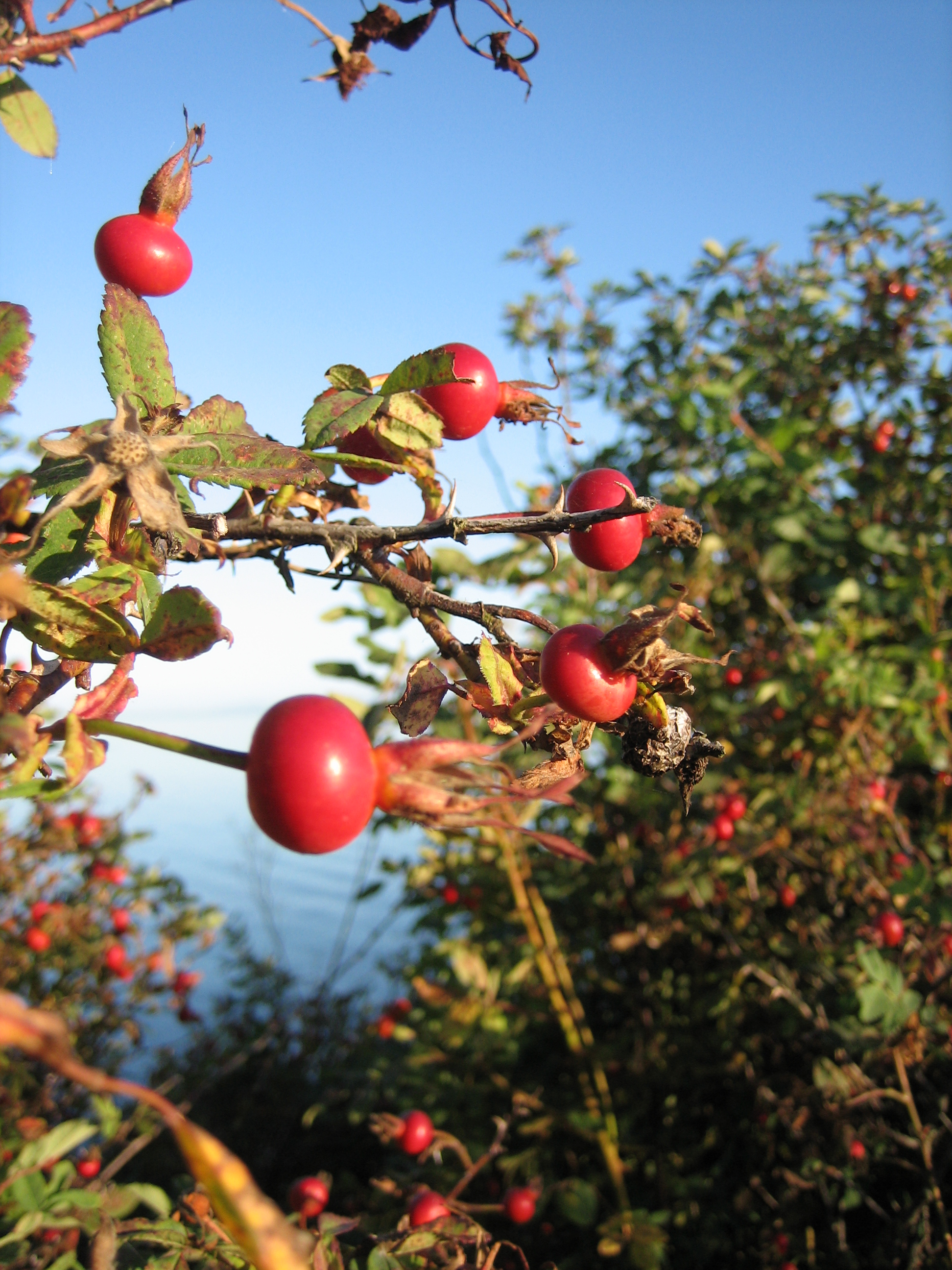
1. After picking rosehips (choose big round fleshy rosehips, just like those above), don't clean them from the seeds, just wash them and don't cut


(this picture is from Wikipedia: http://upload.wikimedia.org/wikipedia/commons/7/74/Rose_hip.JPG. I

2. Put rosehips in a pot and add so much water just to cover fruits, not more. Cook for 20-30 minutes. Fruits have to be soft and water should be orange.

3. Drain. Now you have a delicious rose juice that needs no sugar cause is very sweet and tastes great, and also rosehips which you can use to make a jam. Just rub through a sieve to divide skins and stones from fruit pulp. Boil the pulp with as much sugar as you like and add a bit of lemon juice. Rosehip jam is ready!

4. Back to the jelly. My proportions are 3 spoons potato starch to 2 cups rosehip juice. Boil 1,5 cup juice and aside melt potato flour in 0,5 cup juice. When flour has combined with juice, take the pot from the heat, add flour juice and mix fast. When homogeneous, heat again until bubbles appear. Serve with yoghurt, sour cream or whipped sweet cream.